
Title 24 Energy Compliance in Moreno Valley, CA
Title 24 energy compliance is a mandatory California Building Code requirement: every new ADU and every converted garage or interior space in Moreno Valley must pass a CEC-approved energy analysis before the building department will issue a permit. The compliance report documents insulation values, window performance, mechanical systems, and lighting loads, and it travels with your permit set from plan check through final inspection. Without it, plan check stops – and in Moreno Valley’s current review cycle, a resubmittal can add six to ten weeks to your timeline.
At Ellery ADU Studio, Title 24 compliance isn’t a subcontracted afterthought. It’s produced in-house as part of our ADU Design & Permitting services, delivered under a single written price before any work begins. Nadia Ellery has led every permit set this studio has produced since 2015, and the energy report is drafted alongside the architectural drawings – not retrofitted onto them at the last minute. If you’re building in Moreno Valley and want to understand exactly what the compliance process costs and what you’ll receive at the end of it, call us at (951) 379-3047. A live person will answer.
This page sits within our broader ADU Design & Permitting in Moreno Valley service – if you want the full picture of what goes into a Moreno Valley permit set, that’s the right place to start.
When You Need Title 24 Energy Compliance
California law triggers a Title 24 energy analysis any time you add conditioned square footage or change the energy-consuming systems in an existing space. In Moreno Valley specifically, the following scenarios each require a fresh compliance report:
- New detached ADU construction. Any ground-up ADU on a Moreno Valley lot – whether stick-framed or a prefab system like Cover or Abodu – requires a site-specific energy report. The Inland Empire’s Climate Zone 10 classification means your cooling loads are modeled differently than coastal projects, and a report written for a San Diego lot will fail Moreno Valley plan check.
- Garage-to-living-space conversion. Converting an attached or detached garage in neighborhoods like Sunnymead Ranch or Alessandro Heights means bringing an unconditioned structure up to current envelope and mechanical standards. The energy model must account for the existing slab, any shared wall with the main house, and the window and door openings you’re adding.
- Junior ADU or interior conversion. Carving a JADU out of existing interior space still requires documentation that the reconfigured envelope, lighting, and any new HVAC serving that zone meets 2022 Title 24 Part 6 thresholds.
- Addition of conditioned square footage over 1,000 sq ft. Larger additions in Moreno Valley trigger a whole-building analysis, not just a room-level calculation. If your ADU plan puts total conditioned area over that threshold, the scope of the compliance report expands accordingly.
- Solar-required projects. California’s solar mandate applies to new ADUs with sufficient roof area. The Title 24 report determines minimum PV system size based on your conditioned floor area, climate zone, and orientation – getting this calculation wrong at design means a costly revision at permit.
- Replacing an HVAC system in a permitted ADU. A like-for-like mechanical swap in a previously permitted ADU can still trigger a compliance update if the new equipment changes the system type or if the existing report predates the 2022 code cycle.
Our Title 24 Energy Compliance Process
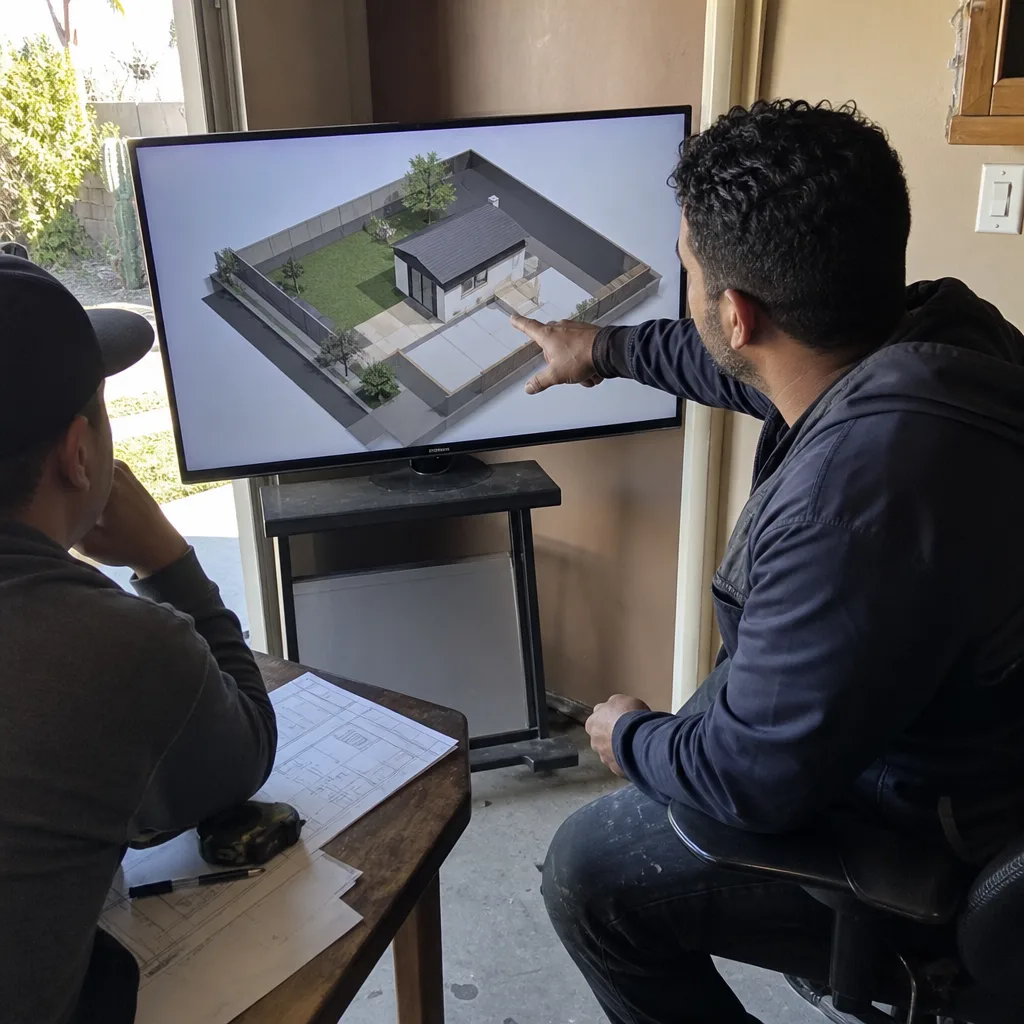
The process below describes exactly what happens when Moreno Valley energy compliance is part of an Ellery ADU Studio project. Because we operate as a ADU Design & Blueprints studio on a single contract, each step feeds directly into the next without a handoff gap between designer and builder.
- Site documentation and climate zone confirmation. We start with a site visit to Moreno Valley and record the lot orientation, existing structure dimensions, shading obstructions, and current insulation conditions where accessible. Moreno Valley falls in CEC Climate Zone 10, which carries a peak cooling design temperature around 107°F – that figure drives the mechanical sizing calculations in every energy model we run here. Clients receive a documented photo record of what we found and what it means for their energy model, consistent with our standard on every visit.
- Architectural coordination before the energy model runs. We align window-to-wall ratios, roof assembly specifications, and proposed HVAC system type with the architectural drawings before the EnergyPro model opens. This order of operations matters. Studios that run the energy model after the drawings are finalized often discover that the specified window area or roof R-value fails compliance – then either the drawings change or the report fudges the inputs. We build the two documents together.
- Energy model production using EnergyPro 8. Our compliance analyst runs the full energy model in EnergyPro 8, the CEC-approved software used by Moreno Valley’s building department. The model outputs a CF1R (certificate of compliance), which becomes the document of record. If the project includes a PV requirement, the CF1R calculates the minimum system size and that figure locks the solar specification in the permit set.
- Written price confirmation before submission. Under Haven Standard Clause 1, the written price for the full scope – including the energy compliance report – is confirmed before we submit to Moreno Valley Building and Safety. No door-side additions, no “the energy report costs extra” surprise at plan check. The scope and price are locked at signing.
- Plan check response and report revision if required. Moreno Valley Building and Safety occasionally requests a revised CF1R when a plan checker flags a discrepancy between the architectural drawings and the energy model inputs. Because we authored both documents, we can resolve that discrepancy in hours rather than the days or weeks it takes when the architect and the energy consultant are separate firms pointing at each other.
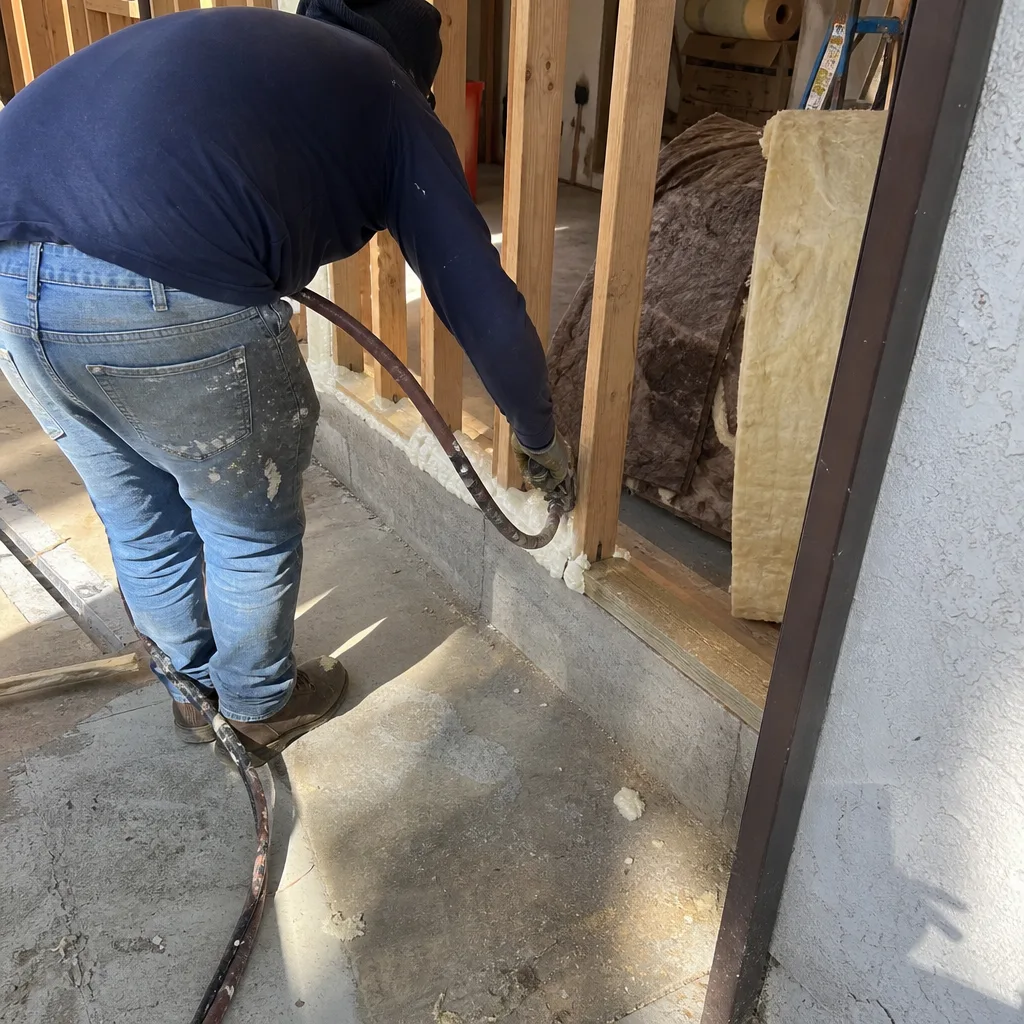
- Field verification documentation at construction milestones. The CF1R requires field verification cards – CF2R and CF3R forms – signed at insulation rough-in and at final inspection. Our crews carry these forms on every site visit and photograph the verified conditions. Clients receive that documentation in their project record. If the finished ADU isn’t built to the permitted drawings and verified compliance conditions, the 365-Day Done Right Promise applies: we make it right, in writing, before the project starts.
Title 24 Energy Compliance Pricing in Moreno Valley
Title 24 energy compliance for a Moreno Valley ADU typically runs between $800 and $2,400 for the report itself, depending on project scope and complexity. For a full breakdown, see our guide on How Much Does ADU Design & Permitting Cost? (2026 Price Guide) - Moreno Valley, CA. The table below breaks down where projects tend to land and what drives the range.
| Project Type | Typical Report Cost Range | Primary Cost Driver |
|---|---|---|
| Junior ADU / Interior Conversion (under 500 sq ft) | $800 – $1,100 | Limited envelope changes, single-zone HVAC |
| Garage Conversion ADU (400-600 sq ft) | $950 – $1,400 | Existing slab and wall conditions, new window openings |
| New Detached ADU (600-1,000 sq ft) | $1,200 – $1,800 | Full envelope model, solar PV sizing calculation |
| New Detached ADU with two-story or complex roof geometry | $1,600 – $2,400 | Multi-zone model, increased iteration to meet compliance |
These ranges reflect Moreno Valley market conditions as of mid-2025. Projects that arrive with architectural drawings already finalized – especially those with high window-to-wall ratios or under-specified roof assemblies – tend to land at the higher end of their range because the energy model requires more iteration to reach a passing CF1R without forcing expensive drawing revisions.
The compliance report is one line item within the total permit-set fee. Ellery quotes the full design-and-permitting scope as a single written number before work begins. If you have a written estimate from another firm, we offer a Free Second Opinion at no cost – bring it in and Nadia Ellery will go through it line by line with you. Call (951) 379-3047 to schedule that conversation.
What the Climate Zone Means for Your Moreno Valley ADU
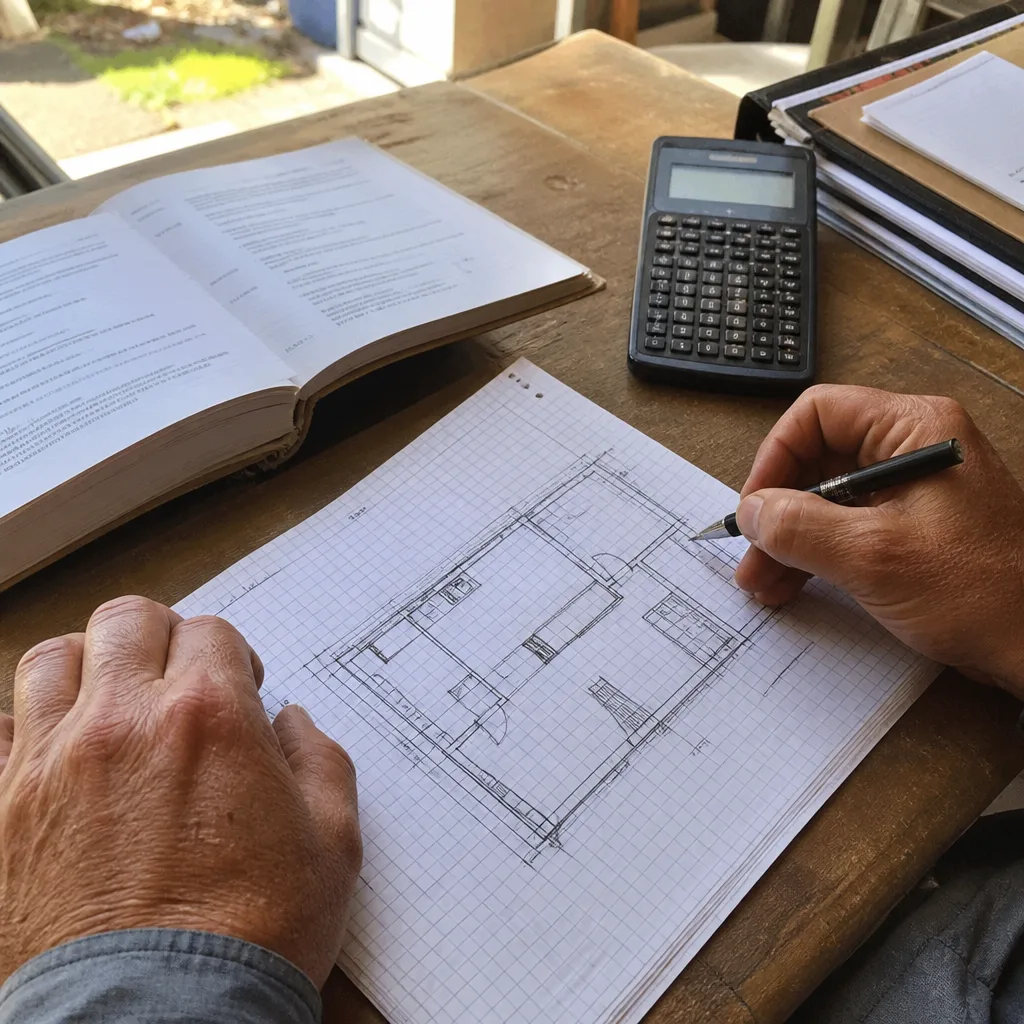
Moreno Valley sits in CEC Climate Zone 10, one of the more demanding zones in Southern California from a cooling standpoint. The valley floor runs hot from June through September, with overnight lows that stay above 70°F during heat events – conditions that translate directly into larger HVAC loads and stricter envelope requirements than projects 30 miles west in Riverside or Temecula.
In practical terms, this means a Moreno Valley ADU typically requires a higher insulation R-value in the ceiling assembly than the state minimums that show up in generalist online calculators. It also means the window specification matters more here than in coastal jurisdictions: a window with a SHGC (solar heat gain coefficient) of 0.25 can be the difference between a passing CF1R and a failing one in the same project. Studios that use a coastal template for a Moreno Valley energy model often produce a report that looks complete but fails on the thermal mass or fenestration compliance path.
We’ve run energy models for ADUs across Moreno Valley’s distinct neighborhoods – the larger lots in Rancho Belago, the denser parcels near March Field, the hillside grading challenges in Edgemont – and the orientation differences between a north-facing lot in Sunnymead and a west-facing lot near Canyon Springs can shift the required window specifications by a meaningful margin. That’s why the site documentation step in our process isn’t a formality.
If your ADU includes James Hardie fiber cement siding – a common specification for Moreno Valley projects given the fire-weather exposure in the foothill areas east of the 215 – the thermal bridging characteristics of that cladding system interact with the wall assembly R-value in the energy model. We account for that interaction in the calculation rather than using a generic wall assembly that understates heat gain.
What You Actually Receive
At the end of the Title 24 compliance process, here’s the documentation that leaves our hands and goes into your project record:
- A stamped, CEC-registered CF1R (Certificate of Compliance) covering the full project scope
- The EnergyPro 8 calculation file, retained on file and available to you on request
- Completed CF2R field verification forms, photographed and dated at insulation rough-in
- Completed CF3R final inspection verification, submitted to Moreno Valley Building and Safety at close of permit
- A written record of the as-built conditions that were verified – not a summary, a documented photo record
That documentation matters beyond final inspection. When you refinance, sell, or insure the ADU, the permit record – including the energy compliance documentation – is what a lender, buyer’s agent, or insurer will request. A complete, properly closed permit file with verified CF2R and CF3R forms is worth more than a permit that was issued but never properly finaled.
FAQs – Title 24 Energy Compliance
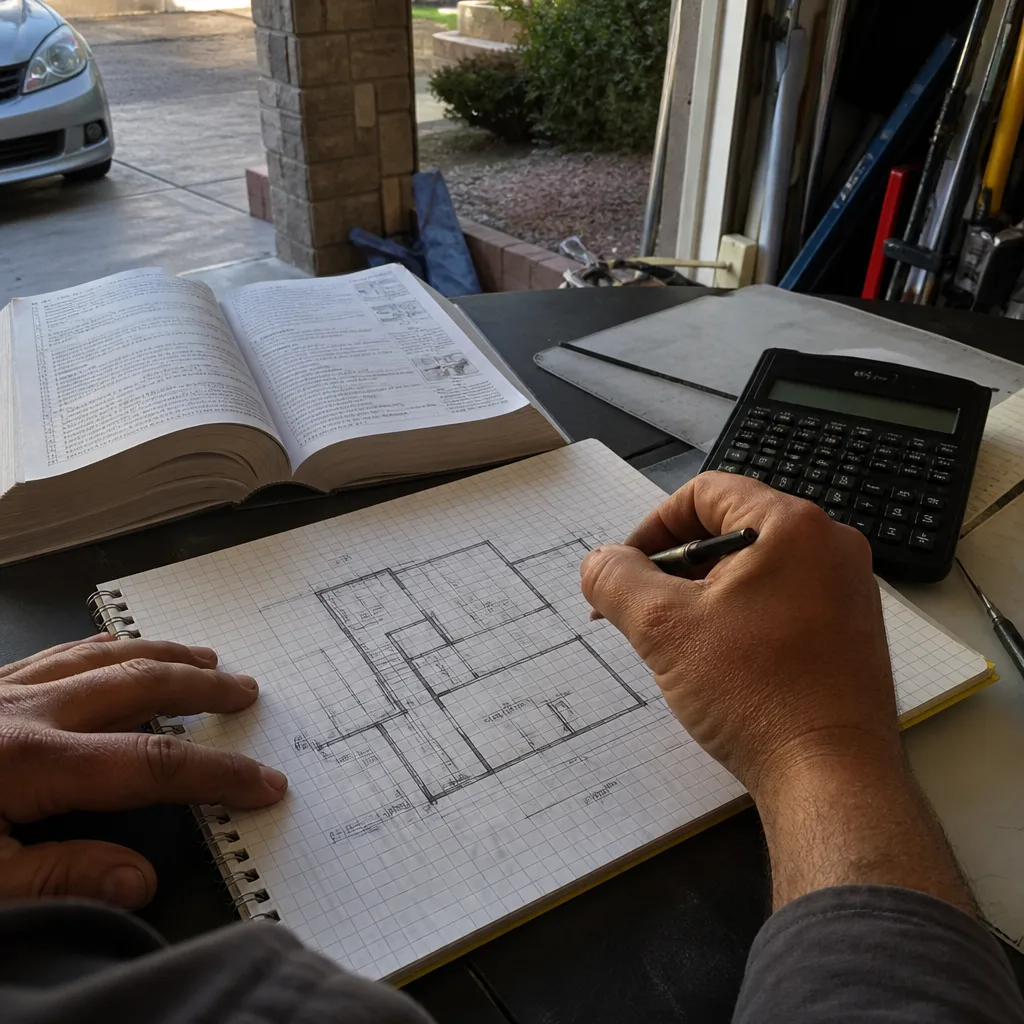
Does every ADU in Moreno Valley require a Title 24 energy report, or only new construction?
Every permitted ADU in Moreno Valley requires a Title 24 compliance report – including garage conversions, interior conversions, and JADUs. The 2022 code cycle closed most of the exemptions that previously allowed small conversion projects to skip a formal energy analysis. If you’re adding conditioned square footage or modifying the mechanical system of a space that will become an ADU, a CF1R is required before plan check can be completed. Call (951) 379-3047 if you’re unsure whether your specific project triggers the requirement – we can confirm based on the project type and square footage in a single conversation.
How much does Title 24 compliance cost for an ADU in Moreno Valley?
Title 24 energy compliance for a Moreno Valley ADU typically costs between $800 and $2,400 for the report, depending on project size and complexity. A junior ADU or simple garage conversion lands near the low end; a two-story detached ADU with complex roof geometry lands near the high end. At Ellery ADU Studio, the compliance report is included as a line item in the full permit-set quote, which is given to you in writing before any work begins – consistent with Haven Standard Clause 1. Call (951) 379-3047 for a written project quote.
Can I use a Title 24 report prepared for a similar project in a nearby city?
No – a compliance report from a Riverside or San Bernardino project won’t pass Moreno Valley plan check, even if the ADU design is identical. The CF1R must list the specific Moreno Valley project address, Climate Zone 10 parameters, and the actual window and wall orientations of your lot. A report prepared for a different address is, in the building department’s view, not a compliance document for your project. We’ve seen homeowners arrive at plan check with reports from previous projects and lose four to six weeks to the resubmittal cycle as a result.
What happens if my ADU fails the Title 24 energy model on the first run?
A failing energy model means the proposed design, as spec’d, doesn’t meet the efficiency threshold required by California’s 2022 code. The fix is almost always a change to one of three things: insulation values, window specifications, or mechanical system efficiency ratings. Because Ellery prepares the energy model alongside the architectural drawings rather than after them, a first-pass failure prompts a drawing adjustment before submission – not a costly revision after plan check has already flagged it. We don’t charge separately for the iteration required to reach a passing CF1R within the original project scope.
Key Takeaways
- Title 24 compliance is required for every new and converted ADU in Moreno Valley, no exceptions under the 2022 code cycle.
- Moreno Valley’s Climate Zone 10 classification produces stricter cooling and envelope requirements than most coastal California jurisdictions – a generic report from another city will fail plan check.
- Compliance report costs for Moreno Valley ADUs typically run $800-$2,400, quoted as part of a full permit-set written price before any work starts.
- The energy model and architectural drawings are produced together at Ellery ADU Studio – not sequentially – which eliminates the revision cycle that adds weeks to projects run by separate design and energy firms.
- Field verification forms (CF2R and CF3R) are photographed and documented at construction milestones; clients receive that record as part of their project file.
- The 365-Day Done Right Promise applies if the finished ADU is not built to the permitted drawings and verified compliance conditions.
Ready to Start Your Moreno Valley ADU Energy Compliance
If you’re planning an ADU anywhere in Moreno Valley – whether that’s a detached build in Rancho Belago, a garage conversion near March Field, or an interior JADU in Sunnymead Ranch – and need ADU Design & Permitting Near Me in Moreno Valley, CA, the Title 24 compliance report is one of the first documents that determines whether your permit set moves through plan check or sits in a resubmittal queue. Nadia Ellery and the Ellery ADU Studio team have produced energy-compliant permit sets for ADU projects across Moreno Valley since 2015, all under a single written price confirmed before work begins.
For a full picture of what goes into a Moreno Valley ADU permit set, visit our ADU Design & Permitting in Moreno Valley page. Or call (951) 379-3047 directly – a live person answers, and if you have a written estimate from another firm, we’ll give you a free second opinion on it at no cost.
Written by Nadia Ellery, Owner at Ellery ADU Studio Moreno Valley, serving Moreno Valley.