
Last updated September 25, 2026
How to Hire a ADU Contractor in Moreno Valley: A Step-by-Step Guide
When a Moreno Valley homeowner’s architect produces drawings the contractor says are “unbuildable as drawn,” both parties are technically correct and neither is contractually responsible for the cost to resolve it. We’ve seen this exact scenario stall ADU projects in Sunnymead Ranch for eight months and add $40,000 in redesign fees. The most expensive hiring mistake in Moreno Valley isn’t choosing the highest bidder - it’s signing a contract that splits design and construction between two parties with no single written price, creating a blame gap that stalls projects for months. This guide will show you how to verify licenses, read bids for hidden scope gaps, and identify whether a contractor has direct experience with Moreno Valley Development Services or relies on third-party expediters who don’t carry the risk. For additional planning resources, see our ADU Design & Permitting Maintenance Checklist for Moreno Valley Homeowners.
Quick Answer
To hire an ADU contractor in Moreno Valley, verify the CSLB license classification matches ADU work, confirm active workers’ compensation and general liability insurance, demand a written fixed price that includes drawings through final inspection, and confirm the contractor has pulled permits directly with Moreno Valley Development Services within the last 12 months. Avoid any arrangement where design and construction are separate contracts with no single party responsible for the total price and timeline.
Table of Contents
- Design-Build vs. Design-Bid-Build: The Contract Structure That Determines Everything
- Five License and Insurance Verifications to Run Before Signing
- How to Read a Bid for Scope Gaps: The Line Items Moreno Valley Contractors Omit
- Permit Experience with Moreno Valley Development Services
- What a Written Fixed Price Must Include to Be Enforceable
- The Interview Questions That Reveal Actual Experience
- Common Mistakes to Avoid
- When to Call a Professional
- Frequently Asked Questions
Design-Build vs. Design-Bid-Build: The Contract Structure That Determines Everything
The single most important decision you make isn’t which contractor to hire - it’s which contractual structure governs your project. This choice determines who bears the risk when drawings conflict with field conditions, and it explains why so many Moreno Valley ADU projects stall in the gap between “plans approved” and “construction started.”
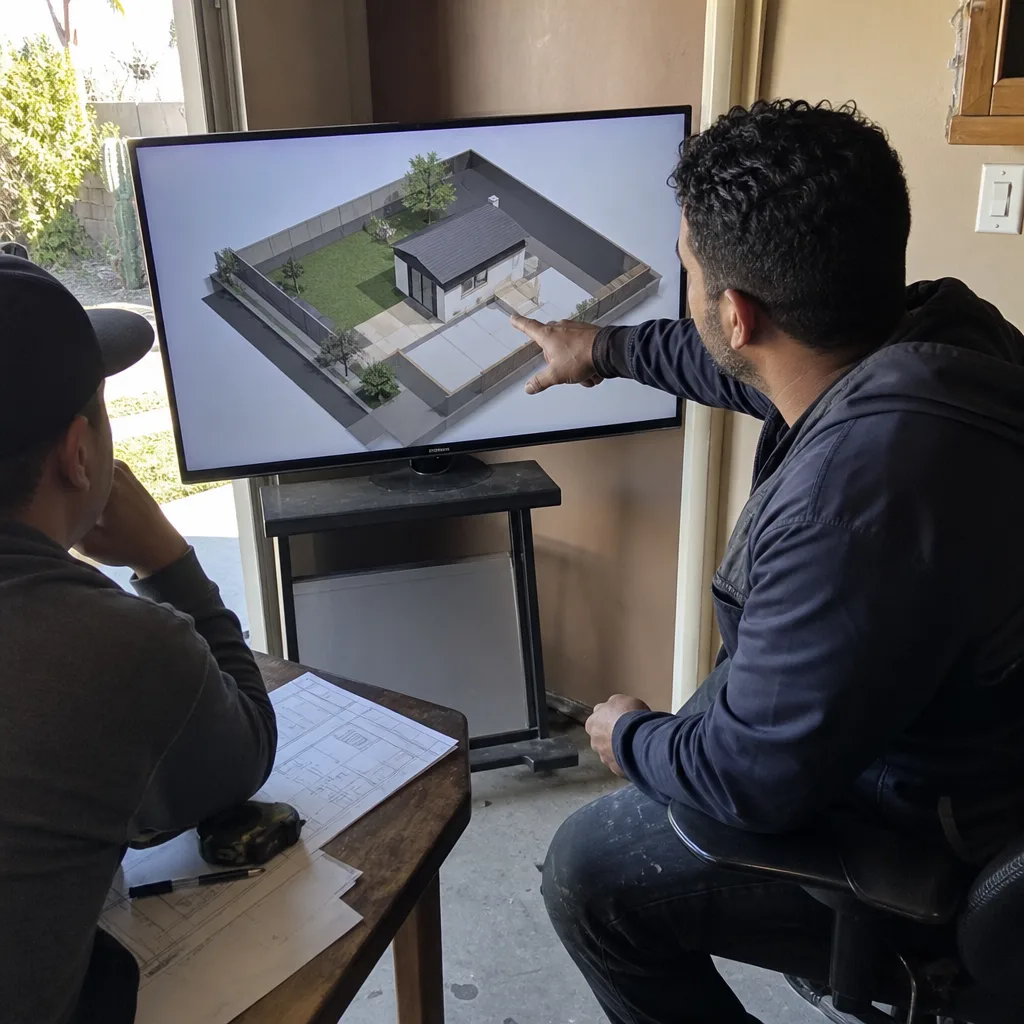
Design-bid-build is the traditional method: you hire an architect or designer to produce drawings, then solicit bids from contractors to build from those drawings. The architect’s contract ends at permit approval. The contractor’s contract begins at construction. If the contractor discovers the foundation depth shown on the plans doesn’t match the actual conditions in your Moreno Valley lot - common in the hillside areas near Box Springs - the architect has no contractual obligation to redesign, and the contractor has no contractual obligation to absorb the cost of the change.
Design-build places design, permitting, and construction under a single contract with a single written price. The same entity that produces the permit set also builds from it. When field conditions differ from expectations, there is no blame gap - the design-build studio adjusts the drawings and absorbs the coordination cost within the original contract.
At Ellery ADU Studio Moreno Valley home, we operate exclusively as a design-build studio. Our ADU Design & Permitting in Moreno Valley and construction teams work from the same contract, the same price, and the same set of permitted drawings. Under Haven Standard Clause 1, that price is written before any work begins - not estimated, not ballparked, but written and signed.
Here’s what to look for in each contract type:
| Element | Design-Bid-Build | Design-Build |
|---|---|---|
| Number of contracts | Two or more (designer + builder) | One |
| Price certainty | Estimate at bid time; change orders common | Written fixed price before work starts |
| Responsibility for permit set accuracy | Designer (ends at permit approval) | Design-build studio (continues through construction) |
| Typical timeline in Moreno Valley | 14-22 months (design delays + construction delays) | 10-16 months (single coordination point) |
| Change order frequency | High (designer/builder blame gap) | Low (single point of accountability) |
The critical language to find in a design-build contract: “Design, permitting, and construction are provided under this single agreement at the total written price of $[X].” If you see language like “Contractor shall build from plans provided by Owner” or “Contractor is not responsible for design errors or omissions,” you are in a design-bid-build arrangement, not a true design-build.
Five License and Insurance Verifications to Run Before Signing
California’s Contractor State License Board (CSLB) database is public and free. Every verification takes under two minutes. We run these on ourselves annually and expect every homeowner to run them on any contractor bidding their Moreno Valley ADU.
- License classification matches the work. ADU construction requires a B-General Building contractor license at minimum. If the contractor holds only a C-10 (Electrical) or C-36 (Plumbing), they cannot legally perform the full scope. For prefab or modular ADUs, confirm the contractor also holds the HIC (Home Improvement Contractor) classification or equivalent manufacturer certification. Enter the license number at cslb.ca.gov and verify the classification list includes B-General Building.
- License status is “Active” with no pending disciplinary action. Check the “Disciplinary Action” section. A suspended license or pending accusation is a stop sign. We’ve seen Moreno Valley homeowners discover too late that their contractor’s license was in “Suspended” status during their project, voiding insurance coverage and permit validity.
- Workers’ compensation insurance is active and matches employee count. Click “Workers’ Compensation Information” on the CSLB page. If the contractor has employees but shows “Exempt from Workers’ Compensation Insurance,” this is a red flag. In California, uninsured worker injuries on your property can become your liability through the homeowner’s property insurance gap.
- General liability insurance certificate names you as additional insured upon contract signing. The CSLB doesn’t verify GL insurance - you must request a certificate of insurance (COI) directly. The COI should show minimum $1,000,000 per occurrence and name you as additional insured for the project duration. Verify the policy dates cover your projected construction window.
- The “ADU-specific” question: Has this license pulled permits for ADU work in Moreno Valley within 12 months? This isn’t on the CSLB page - you ask the contractor directly, then verify. Request the permit numbers and call Moreno Valley Development Services at (951) 379-3047 to confirm the permits were pulled under that license and have passed inspection. A contractor who “does ADUs” but hasn’t pulled an ADU permit in Moreno Valley recently is learning on your project.
At Ellery ADU Studio, our license number appears on every page of our site. We encourage verification - it’s the first filter that separates documented professionals from those hoping you won’t check.
How to Read a Bid for Scope Gaps: The Line Items Moreno Valley Contractors Omit
A bid is a promise written in line items. What isn’t listed is often more important than what is. In Moreno Valley’s climate - hot, dry summers with occasional Santa Ana wind events, and clay-heavy soils in the Edgemont and Rancho Belago areas - certain omissions become expensive surprises. Our Seasonal ADU Care for Moreno Valley: Year-Round Homeowner’s Guide covers how weather patterns affect long-term maintenance planning.
Here’s how to read for the gaps that become change orders:
Foundation and soils work. Does the bid specify soil testing, or does it assume “standard conditions”? Moreno Valley’s expansive clay soils in eastern neighborhoods can require pier-and-grade-beam foundations rather than standard slabs. A bid that says “concrete slab, 4-inch” without a soils contingency is guessing. Ask: “What happens if the soils report requires deepened footings?” The answer should be in writing, not verbal.
Utility service upgrades. Many Moreno Valley homes built before 1990 have 100-amp electrical service. An ADU with electric HVAC, water heater, and kitchen appliances typically requires 200-amp service. Does the bid include the service upgrade, the trenching to the new panel location, and Southern California Edison coordination? Or is it listed as “by others”?
Sewer lateral condition and capacity. Moreno Valley’s older neighborhoods, particularly around the original townsite, have clay sewer laterals that fail when disturbed. A bid that says “connect to existing sewer” without a video inspection contingency is incomplete. The replacement of a collapsed lateral under the street can exceed $15,000 and requires Western Municipal Water District coordination.
Fire separation and egress. For garage conversion ADUs in Moreno Valley, the bid must specify fire-rated drywall between the ADU and any remaining garage space, plus compliant egress windows. We’ve reviewed bids that priced the conversion as “finish out” without these code-mandated items - a $4,000-$7,000 gap that appears as a change order after framing inspection fails.
Final connection fees and school fees. Moreno Valley Unified School District charges developer impact fees on new detached ADUs. The 2024 fee schedule runs approximately $3.88 per square foot. Some bids omit this entirely, treating it as the homeowner’s “permit cost” rather than a construction line item. It should appear in the written price or be explicitly noted as a homeowner responsibility with the exact amount.
Prefabricated system coordination. If you’re considering a prefab unit from Abodu, Cover, or Tuff Shed, the bid must include crane rental, set crew, and finish trade coordination - not just “unit delivery.” Crane access in Moreno Valley’s tighter lots, particularly in the Meadowbrook area, may require street closure permits and utility line clearance. These are not afterthoughts; they’re line items or they’re change orders.
Under Haven Standard Clause 5 (No Surprises), our scope is locked at signing. Every line item above appears in our written price, or we explicitly state why it doesn’t apply to your specific lot and show you the documentation.
Permit Experience with Moreno Valley Development Services
Moreno Valley Development Services operates under the 2024 California ADU law streamlining requirements, but local implementation details matter. A contractor who “knows ADUs” but hasn’t submitted directly to Moreno Valley in the past year is unfamiliar with current submittal requirements, digital plan check protocols, and inspector preferences.
Here’s how to verify actual local experience:
- Ask for the last three ADU permit numbers they pulled in Moreno Valley. Then call Development Services at (951) 379-3047 and ask to confirm the permit status. You don’t need the contractor’s permission - permits are public record. Ask specifically: “Was this permit pulled by [license number] or by a third-party expediter?”
- Ask whether they use an in-house permit technician or an outside expediter. Third-party expediters are common and not inherently problematic, but they add a communication layer. When the city requests a correction, the message flows: city → expediter → contractor → you → back. A contractor with direct Moreno Valley experience handles corrections in-house, typically cutting response time by 1-2 weeks per cycle.
- Ask about the specific ADU submittal format. Moreno Valley currently requires digital plan check through ProjectDox with specific naming conventions and sheet order. A contractor who describes “dropping off plans at the counter” hasn’t submitted recently - physical drop-off for ADUs ended in 2022.
- Ask about typical correction cycles. In our experience at Garage Conversion ADU in Moreno Valley, first-round corrections on garage conversions average 2-3 items; new detached ADUs average 4-6. A contractor who says “usually approved first time” either hasn’t done many or is misremembering. First-round approval is rare in any California jurisdiction.
- Ask about fire department coordination. Moreno Valley Fire Department reviews ADU plans for egress and access compliance. A contractor who hasn’t encountered this review doesn’t have recent detached ADU experience in the city.
We’ve submitted over 200 ADU permit sets to Moreno Valley Development Services since 2015. Our permit technician sits in our office, not across town. When corrections come back, we turn them in 48 hours, not two weeks.
What a Written Fixed Price Must Include to Be Enforceable
“Fixed price” is not a magic phrase. Its enforceability depends on what the document actually contains. A handshake, an email with a number, or a one-page “proposal” with a total and a signature line will not protect you when scope disputes arise.
An enforceable written fixed price for a Moreno Valley ADU must include:
- Line-item breakdown by phase. Design and permitting; site prep and utilities; foundation; framing; MEP (mechanical, electrical, plumbing); finishes; final connections and closeout. Each phase has a dollar amount. This isn’t for you to nitpick - it’s so that when a phase is complete, you know exactly what was paid for and what remains.
- Explicit “included” and “excluded” lists. The excluded list is where contractors hide future change orders. Common exclusions that should be explicit: soil conditions worse than standard; discovery of undocumented utilities; homeowner-requested changes after permit approval; delays caused by HOA approval (relevant in Moreno Valley’s planned communities like Shadow Mountain).
- Permit and fee schedule with amounts. City of Moreno Valley plan check fees, building permit fees, school impact fees, utility connection deposits - each named with the current amount or a “not-to-exceed” figure with reconciliation.
- Payment schedule tied to verifiable milestones. Never a large upfront deposit. Standard practice: 10% at contract, 25% at permit issuance, 25% at rough inspection, 30% at final inspection, 10% at certificate of occupancy. Each payment is contingent on a documented milestone, not a calendar date.
- Change order procedure in writing. How are changes priced? Who approves them? What is the markup percentage? Haven Standard Clause 5 specifies: no change order is valid unless written, signed by both parties, and priced before work proceeds. Verbal approvals are void.
- Warranty language with duration and scope. What is covered, for how long, and what triggers it? Our 365-Day Done Right Promise is in writing before the project starts: if the finished ADU is not built to the permitted drawings, we make it right. The specific deviations that trigger the promise are documented in the photo record.
- Dispute resolution mechanism. Mediation before litigation, with a named mediator or process. This keeps disputes out of Riverside County Superior Court, where ADU cases currently back up 14-18 months.
A document missing any of these seven elements is an estimate dressed as a contract. It will shift after demolition begins, and you will have limited recourse.
The Interview Questions That Reveal Actual Experience
Most hiring guides suggest asking “How long have you been in business?” and “Can you provide references?” These questions invite rehearsed answers. The questions below are designed to surface specific, verifiable experience that can’t be faked.
“Walk me through your last Moreno Valley ADU from initial site visit to certificate of occupancy. What went wrong, and how was it resolved?”
A contractor with genuine local experience will describe a specific lot condition, a specific inspector correction, or a specific weather delay. A contractor without it will speak in generalities. Listen for neighborhood names, inspector names, or specific code interpretations. In our last New Detached ADU in Moreno Valley project in Sunnymead Ranch, we encountered an unrecorded easement that required a 4-foot setback shift - resolved by redesigning the porch configuration and resubmitting to Development Services in 72 hours.
“What is your current backlog, and when could you break ground if we signed today?”
Honest contractors know their backlog to the week. Vague answers like “we’re scheduling into next quarter” without specifics suggest poor project management. In Moreno Valley’s climate, breaking ground in July through September means working through 100°F+ temperatures, which affects concrete curing and crew scheduling. A contractor who doesn’t mention this tradeoff hasn’t built through a Moreno Valley summer.
“Show me your standard permit set for a garage conversion. What sheets do you include, and who stamps them?”
The permit set is the core product, not an afterthought. A complete Moreno Valley garage conversion permit set includes: site plan with setbacks; floor plan with egress dimensions; elevations; electrical plan with load calculations; plumbing plan with fixture schedule; structural details for any modifications; and Title 24 energy compliance documentation. If the contractor outsources the permit set to a drafter you’ve never met, you have a design-bid-build relationship with extra steps.
“What prefab or modular systems have you specified and coordinated, and what were the specific challenges?”
If you’re considering a system from Abodu, Cover, or James Hardie, you need a contractor who has actually coordinated one - not read the brochure. Each system has specific foundation requirements, crane access needs, and finish-trade integration points. We’ve specified and coordinated Abodu, Cover, Dvele, Mighty Buildings, Boxabl, Plant Prefab, Tuff Shed, and James Hardie systems within our single-contract model. The crane pad for a Tuff Shed ADU in Rancho Belago required engineered fill due to the area’s expansive soils - a line item that doesn’t appear in the manufacturer’s standard specification.
“What does your photo record include, and when do I receive it?”
Documentation is evidence, not marketing. Our documented photo record includes date-stamped images of pre-existing conditions, each inspection pass/fail, and any deviations from the permitted drawings with explanatory notes. Clients receive the full record at project closeout, not a curated selection.
Common Mistakes to Avoid
- Hiring the lowest bid without verifying what’s excluded. A $85,000 garage conversion bid that excludes fire separation, electrical service upgrade, and school impact fees will cost $110,000 before you reach occupancy. The “lowest” bid is often the most incomplete.
- Accepting a “design allowance” instead of a designed permit set. Some contractors bid $5,000 for “architectural plans” without producing a buildable permit set. The homeowner then pays $15,000-$25,000 to a separate designer when those sketches are rejected by Development Services.
- Ignoring the designer-versus-builder blame gap. When the architect specifies a 12-foot ceiling and the contractor discovers the existing garage trusses only allow 9 feet, who pays for the redesign? In a design-bid-build arrangement, you do. In a design-build arrangement, the studio absorbs it.
- Not verifying permit history with Moreno Valley Development Services. A contractor’s website may show “Moreno Valley ADU specialists” but their permit history reveals only kitchen remodels. The city will confirm in a two-minute phone call.
- Signing without a written payment schedule tied to inspections. Calendar-based payments (“25% per month”) incentivize the contractor to stretch the timeline. Inspection-based payments incentivize progress.
- Overlooking utility coordination in the bid. Southern California Edison and Western Municipal Water District both require separate applications for ADU service. A bid that says “utilities included” without naming these entities is incomplete.
- Assuming prefab means faster without verifying site readiness. A modular unit from Cover or Abodu can be set in a day, but the foundation, utility trenching, and finish connections still require 8-12 weeks. The “fast” part is factory construction, not total project duration.
When to Call a Professional
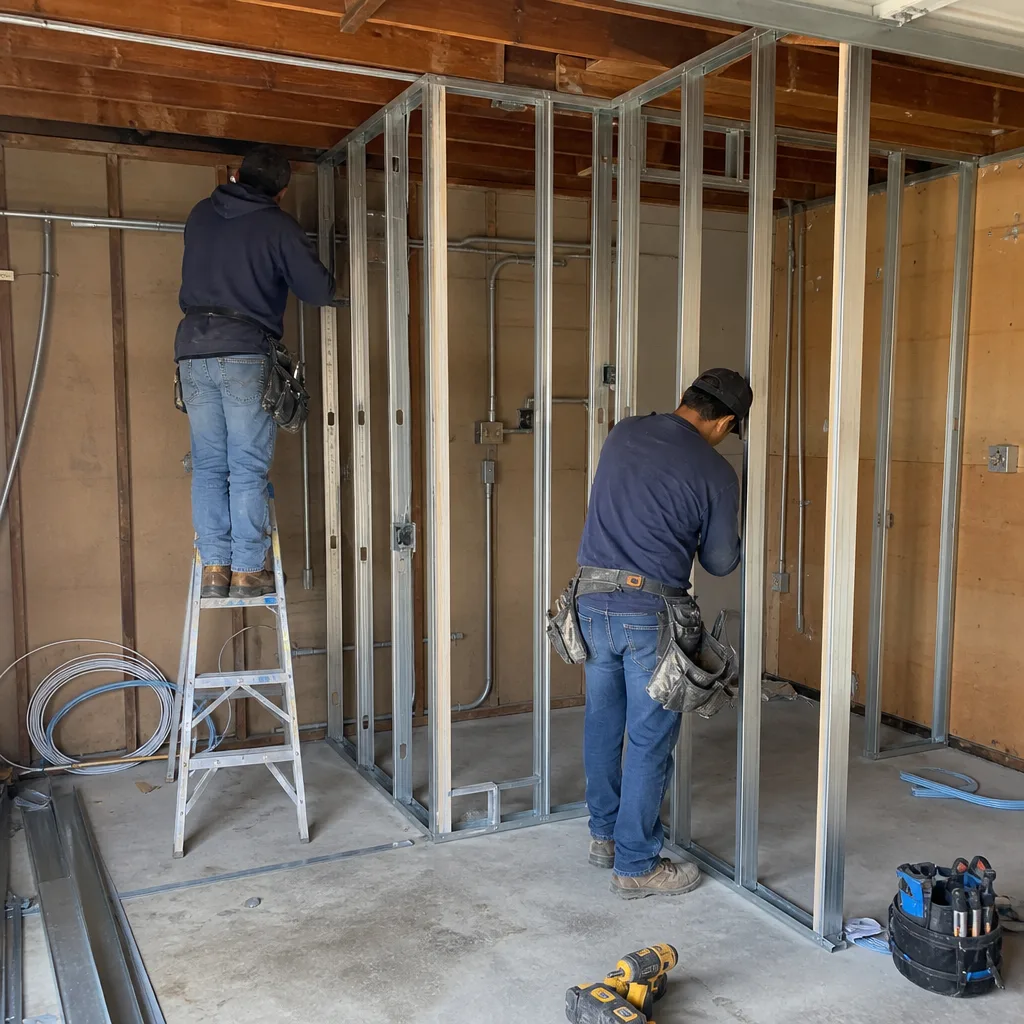
Call a design-build professional when your ADU project involves any of the following: a garage conversion where the existing slab condition is unknown; a new detached unit on sloped or expansive soils; coordination with a homeowners’ association in a planned community; or any situation where you’ve already received conflicting information from a designer and a builder. Ellery ADU Studio Moreno Valley offers free estimates in Moreno Valley - call (951) 379-3047. We also provide a Free Second Opinion on any written estimate already in hand, with specific attention to scope gaps and exclusion language.
Frequently Asked Questions
Garage conversion ADUs in Moreno Valley typically run $95,000-$145,000 all-in, drawings through final inspection, while new detached ADUs range $220,000-$340,000 depending on size, foundation requirements, and finish level. See our ADU Cost Breakdown: The Moreno Valley Homeowner’s Reference for 2026 for detailed line-item analysis. Every project we quote receives a written price before any work begins, per Haven Standard Clause 1 - call (951) 379-3047 for an exact quote; estimates are free.
The price will not change unless you request a change in scope, the city requires a code-mandated modification not foreseeable at signing, or concealed conditions are discovered that no reasonable inspection could have revealed. Under Haven Standard Clause 5 (No Surprises), any such condition is documented with photos, priced in writing, and approved by you before work proceeds. Call (951) 379-3047 for an exact quote; estimates are free.
We pull all permits directly with Moreno Valley Development Services as part of our single-contract scope. You receive copies of all permit documents, inspection records, and the final certificate of occupancy. We do not use third-party expediters for permit submission - our in-house technician handles the entire process.
From contract signing to certificate of occupancy, garage conversion ADUs typically take 6-9 months and new detached ADUs 10-14 months in Moreno Valley. Timeline depends on Moreno Valley Development Services plan check cycles (currently 4-6 weeks for ADUs), weather during foundation work, and your responsiveness to design decisions. Summer concrete pours in Moreno Valley’s heat require specific curing protocols that can add 3-5 days to the foundation schedule.
A B-General Building contractor can legally perform the complete ADU scope including foundation, utility connections, and finish work. Prefab manufacturer certification - from Abodu, Cover, or similar - authorizes the contractor to specify and coordinate that specific system but does not replace the B license for site-built components. We hold both: B-General Building plus direct coordination agreements with multiple prefab brands, all under one contract.
Moreno Valley Development Services requires a soils report for new detached ADUs on lots with slopes greater than 5%, in areas with known expansive soils (eastern Moreno Valley including Rancho Belago and Edgemont), or when the building official determines geotechnical conditions warrant review. Garage conversions on existing slabs typically do not require new soils reports unless the slab shows significant cracking or settlement. We assess this at our initial site visit and include the determination in your written price.
Under our 365-Day Done Right Promise, if the finished ADU is not built to the permitted drawings, we make it right - in writing, before the project starts. The specific deviations that trigger this promise are documented in the photo record from each construction visit. This is not a generic “satisfaction” guarantee; it is a specific, enforceable commitment tied to the documented permit set.
The Bottom Line
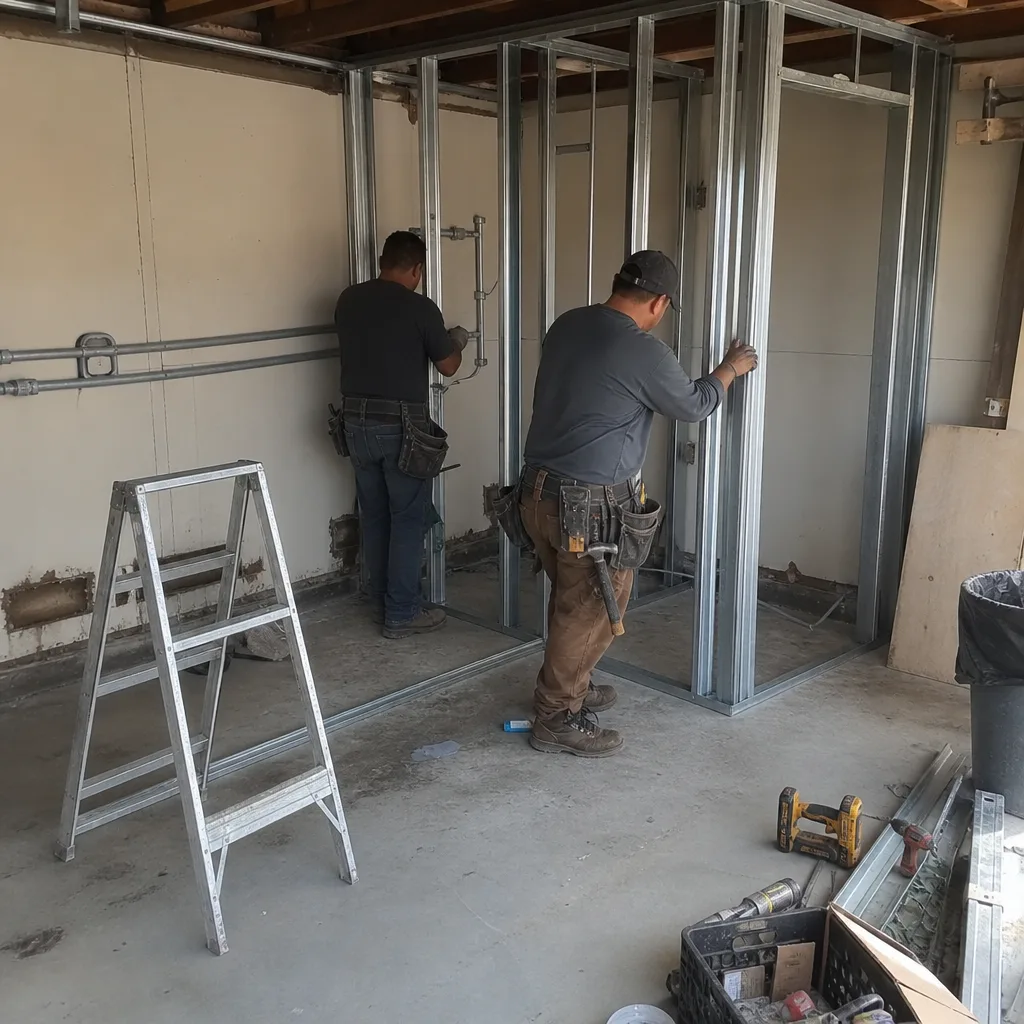
Hiring an ADU contractor in Moreno Valley is not about finding the lowest bid or the longest resume. It’s about finding a single contract with a single written price, backed by verifiable license status, direct local permit experience, and documentation at every phase. The design-build model eliminates the blame gap that stalls most projects. The written fixed price, with line-item detail and explicit exclusions, eliminates the surprise change orders that blow budgets. And the documented photo record gives you evidence, not assurances. Verify everything on the CSLB database. Ask the specific questions that surface real experience. And never sign a contract that splits design and construction without a single party responsible for making it right. For more guides & resources on ADU planning throughout the region, explore our blog.
Written by Nadia Ellery, Owner at Ellery ADU Studio Moreno Valley, serving Moreno Valley since 2015.