
Last updated September 25, 2026
ADU Cost Breakdown: The Moreno Valley Homeowner’s Reference for 2026
A $250 per square foot ADU quote and a $400 per square foot quote can describe the same finished unit in Moreno Valley. The difference is not the quality of the build. It is which costs are inside the contract and which arrive as change orders after the permit set is approved. We’ve reviewed hundreds of estimates since 2015, and the single most expensive mistake a homeowner makes is comparing headline per-square-foot numbers without demanding a line-item breakdown. This guide names every cost category for a typical Moreno Valley ADU, gives a 2025-2026 dollar range for each, and explains which ones are fixed by city or state fee schedules and which ones move with your lot conditions and scope choices. For related reading, see our ADU Permits, Codes & Inspections in CA: What You Need to Know.
Quick Answer
A complete 600 square foot detached ADU in Moreno Valley in 2026 typically costs $195,000 to $285,000 all-in, from initial drawings through final inspection. That range breaks into roughly 8% to 12% for design and permitting, 15% to 22% for site prep and utilities, and 66% to 77% for construction, with a 10% contingency held for conditions discovered during excavation or utility tie-in. The exact position inside that range depends on whether your lot is flat or sloped, whether your soil requires engineered fill, and whether you choose standard finishes or upgrade to systems like Abodu or Cover.
Table of Contents
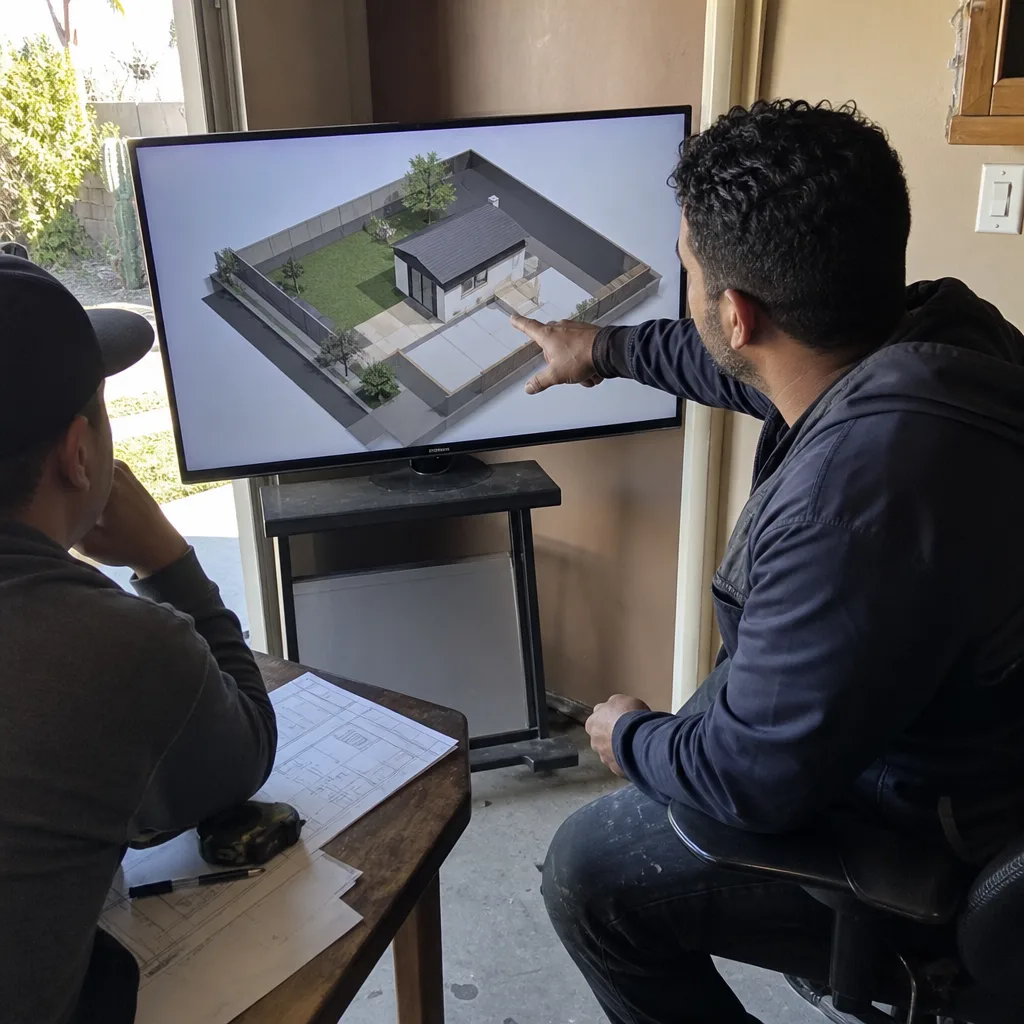
- Why Per-Square-Foot Figures Fail
- Line-Item Cost Table: 600 Sq Ft Detached ADU in Moreno Valley
- Fixed vs. Negotiable: What Moreno Valley and California Control
- Lot Conditions That Move the Needle
- Garage Conversion vs. Detached vs. JADU: Cost and Income Comparison
- What the Haven Standard Written Fixed Price Covers
- Financing and Permits in Moreno Valley
- Common Mistakes to Avoid
- When to Call a Professional
- Frequently Asked Questions
Why Per-Square-Foot Figures Fail
Per-square-foot pricing persists in ADU marketing because it is easy to say and hard to verify. A builder advertises “$275 per square foot” and a homeowner multiplies by 600 square feet, expecting a $165,000 project. The actual invoice comes in at $240,000. The gap is not deception. It is omission.
The $275 figure likely covers only rough construction: framing, roofing, windows, and standard finishes. It does not include the geotechnical report that Moreno Valley requires when native soils are suspect. It does not include the Title 24 energy compliance documentation, the school district impact fees, the water meter upsizing, or the landscaping and hardscaping required to satisfy Moreno Valley’s front-yard visibility standards. Each of these is a real cost, and each appears on a separate line of the final invoice.
We quote every new detached ADU in Moreno Valley with a written line-item scope before any work begins. Under Haven Standard Clause 1, the price is fixed at signing. This is only possible because we itemize every category, including the ones that other builders treat as allowances or TBD line items.
The honest way to compare ADU costs is to demand a table with these columns: category, description, dollar range, and whether the amount is fixed or variable. Anything less is a conversation, not a quote.
Line-Item Cost Table: 600 Sq Ft Detached ADU in Moreno Valley
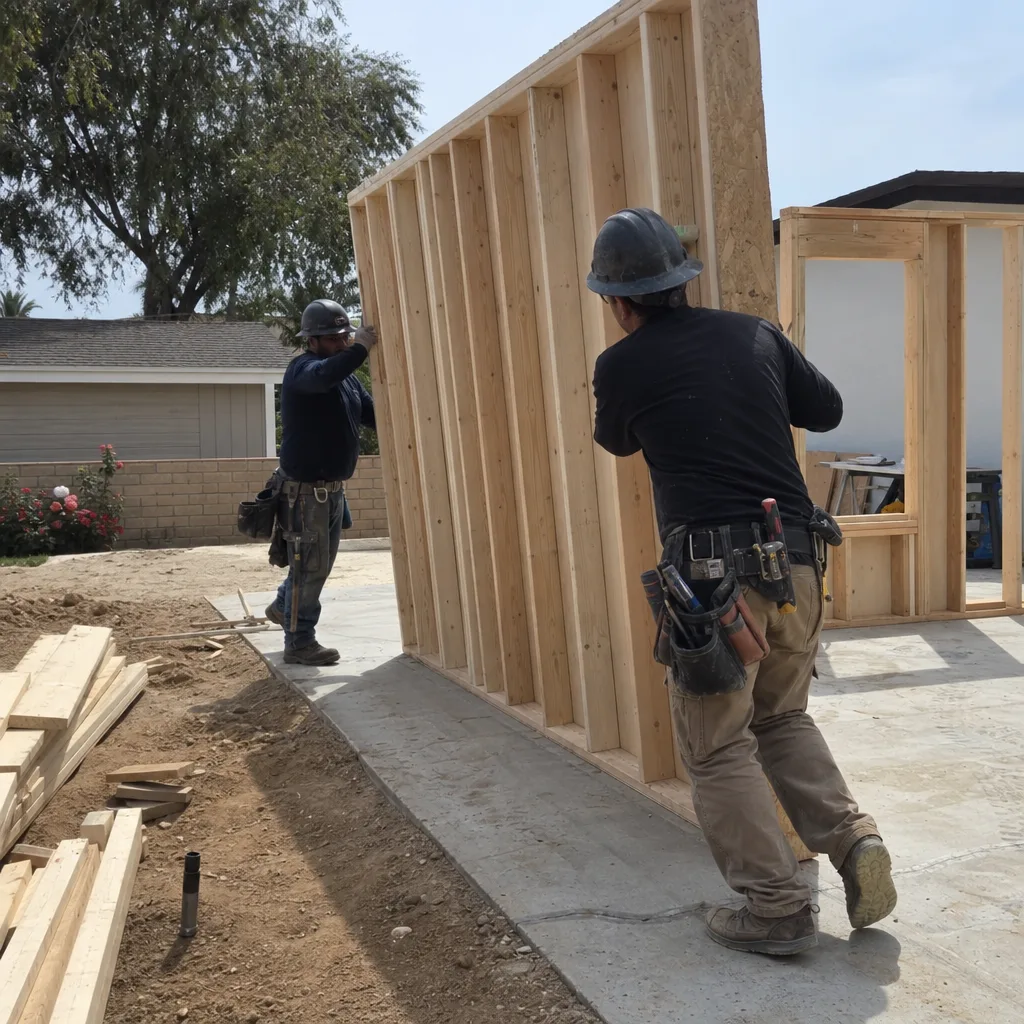
The table below reflects our experience pricing and building ADUs in Moreno Valley from 2023 through early 2026. Ranges are for a flat, rectangular lot with standard clay-loam soils and existing utility access at the rear yard. Sloped lots, expansive soils, or long utility extensions move categories into the high end or beyond.
| Cost Category | Description | 2025-2026 Range | Fixed or Variable |
|---|---|---|---|
| Architectural Design & Permit Set | Schematic design, construction documents, Title 24 energy analysis, structural calculations | $12,000 - $18,000 | Fixed at contract |
| Civil Engineering | Grading plan, drainage, utility connection details for lots with slope or drainage issues | $3,500 - $8,000 | Variable by lot |
| Geotechnical / Soils Report | Borings, lab analysis, engineered recommendations for foundation design | $2,500 - $5,500 | Variable by soil |
| Title 24 Energy Compliance | CF-1R documentation, HERS verification, compliance software and third-party testing | $2,000 - $3,500 | Fixed by state code |
| Plan Check & Building Permit Fees | Moreno Valley Development Services review, building permit, plumbing, electrical, mechanical permits | $6,500 - $10,000 | Fixed by city fee schedule |
| School District Impact Fees | Moreno Valley Unified School District fees per state SB 13 / AB 602 formulas | $3,000 - $5,500 | Fixed by state law |
| Water & Sewer Connection / Meter Fees | Eastern Municipal Water District connection, meter upsizing, backflow assembly | $4,500 - $12,000 | Variable by distance |
| Site Prep & Utilities Rough | Demolition, grading, trenching, utility stub-outs, temporary power | $15,000 - $35,000 | Variable by conditions |
| Foundation | Standard stem wall on grade; engineered slab for expansive soils | $18,000 - $32,000 | Variable by soil |
| Framing & Structural | Lumber or steel frame, shear walls, hardware, engineering per plan | $28,000 - $42,000 | Fixed by design |
| Roofing & Exterior | Comp shingle or standing seam, James Hardie siding or equivalent, trim, paint | $16,000 - $26,000 | Variable by material |
| Windows & Doors | Title 24-compliant dual-pane, exterior door, sliding or French door | $8,000 - $14,000 | Variable by spec |
| Mechanical, Electrical, Plumbing | HVAC mini-split, panel upgrade if needed, full kitchen and bath rough and finish | $22,000 - $34,000 | Variable by scope |
| Kitchen & Bath Finish | Cabinets, countertops, fixtures, tile, appliances | $14,000 - $24,000 | Variable by grade |
| Interior Finish | Flooring, base, trim, paint, closet systems, lighting | $12,000 - $20,000 | Variable by grade |
| Landscaping & Hardscaping | Required rear-yard setback landscaping, walkway, patio per code | $5,000 - $12,000 | Variable by design |
| Contingency (10%) | Held for unforeseen conditions: rock, groundwater, utility conflicts | $19,000 - $28,000 | Variable by discovery |
| Total All-In Project | Design through final certificate of occupancy | $195,000 - $285,000 | See above |
The low end of this table assumes a flat lot with sandy clay loam soils, no panel upgrade needed, standard vinyl or James Hardie siding, and a straightforward water connection within 30 feet of the existing meter. The high end assumes a sloped lot in the hills east of Pigeon Pass Road, expansive soils requiring a post-tensioned slab, a 200-amp panel upgrade, and a 75-foot water line extension across a driveway.
We have built ADUs in both conditions in Moreno Valley. The difference is not hypothetical. It is documented in our permit sets and photo records for every project.
Fixed vs. Negotiable: What Moreno Valley and California Control
Some ADU costs are set by government fee schedules and cannot be negotiated down, regardless of contractor or political connections. Others move with market conditions, lot specifics, and your finish selections. Knowing which is which protects you from two common errors: paying a premium for a “discount” on a fixed fee, or accepting a low bid that omits a variable cost entirely.
Fixed by Law or Fee Schedule
- Plan check and building permit fees: Moreno Valley Development Services publishes its fee schedule annually. For a 600 square foot ADU, the building permit, plan check, and sub-permits (plumbing, electrical, mechanical) total $6,500 to $10,000 depending on valuation method. No contractor can reduce this.
- School district impact fees: Governed by state law (SB 13, AB 602) and calculated by the Moreno Valley Unified School District. For an ADU under 750 square feet, the fee is capped but not zero. Expect $3,000 to $5,500.
- Title 24 energy compliance: The California Energy Commission sets the standards. The documentation and third-party HERS verification cost $2,000 to $3,500 for a typical ADU. The only way to reduce this is to build smaller than the trigger thresholds, which is rarely practical.
- Connection fees for water and sewer: Eastern Municipal Water District sets these. The base connection fee is fixed; only the line extension distance is variable.
Negotiable by Scope and Market
- Design and permit set: Architectural fees vary by firm and complexity. Our ADU Design & Permitting in Moreno Valley is priced as a fixed line item, but market rates for comparable services range from $12,000 to $25,000 depending on whether you hire a drafter, an architect, or a design-build studio.
- Foundation type: A standard stem wall on grade runs $18,000 to $22,000. A post-tensioned slab for expansive soils runs $28,000 to $32,000. The soil report determines which you need, but you choose whether to over-engineer.
- Exterior materials: Tuff Shed-style pre-engineered structures with metal siding start lower. James Hardie fiber-cement siding with trim details adds $6,000 to $10,000 to the exterior line item but carries a 30-year warranty and satisfies Moreno Valley’s wind-driven debris standards without upgrade.
- Interior finishes: The gap between builder-grade and mid-grade finishes in a 600 square foot ADU is $8,000 to $14,000. This is entirely your choice and has no bearing on permit approval.
The Haven Standard addresses this directly. Under Clause 5 (No Surprises), every fixed fee is named at signing. Every variable category is given a range with a written explanation of what conditions would push it to the high end. You see the full picture before you commit, not after the foundation is poured.
Lot Conditions That Move the Needle
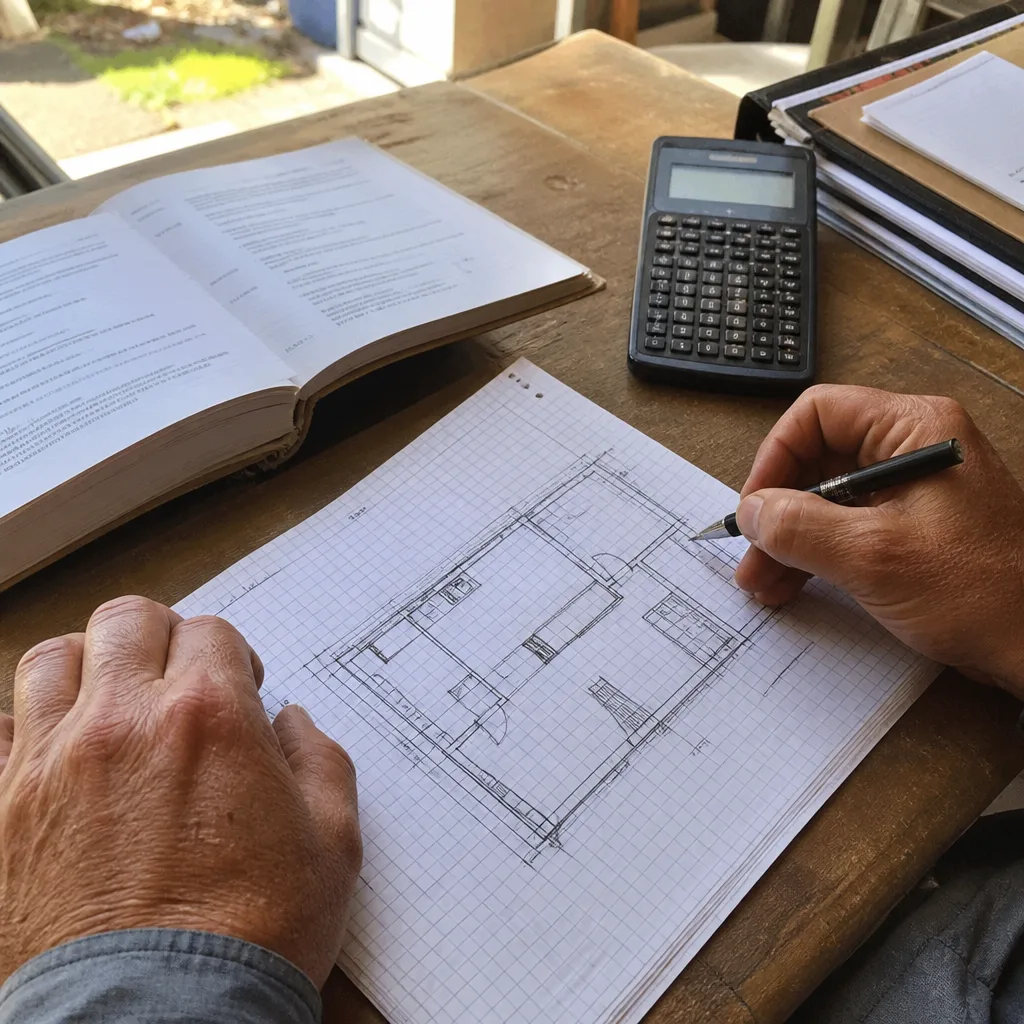
Moreno Valley’s geography is not uniform, and neither are its lots. The flat neighborhoods south of the 60 freeway, near Sunnymead Ranch, present different challenges than the hillside parcels north of Ironwood Avenue or the older infill lots west of Heacock Street. We’ve permitted ADUs in all of them. Here is what we’ve found moves costs predictably.
Slope and Grading
Moreno Valley’s hillside areas, particularly north of Alessandro Boulevard and east of Pigeon Pass Road, often require engineered retaining walls or tiered foundations. A flat lot needs minimal grading: $3,000 to $5,000 for rough cut and compacted fill. A sloped lot with a 6-foot grade change across the buildable area can add $12,000 to $25,000 in retaining walls, engineered drainage, and imported fill. The city requires a civil grading plan for any cut or fill exceeding specific thresholds, which adds $3,500 to $8,000 in engineering fees.
Soil Type and Expansiveness
The Riverside County soil survey identifies much of central Moreno Valley as Yolo sandy loam or Hanford fine sandy loam, both generally stable for standard foundations. But pockets of expansive clay exist, particularly in the Box Springs area and near the Lake Perris floodplain. When our geotechnical consultant finds a Plasticity Index above 25, we design a post-tensioned slab or pier-and-grade-beam system. That foundation upgrade adds $8,000 to $14,000. The alternative, a cracked slab and stuck doors in year three, is not a savings.
Utility Access and Distance
Moreno Valley’s older neighborhoods, including portions of the historic downtown grid and the pre-1980 tracts near March Air Reserve Base, often have undersized water mains or shared sewer laterals. If your existing meter is 5/8 inch and the ADU kitchen and bath require a 1-inch meter, Eastern Municipal Water District charges for the upsize plus the line extension. We’ve seen water connection costs range from $4,500 (30 feet of trench, no upsize) to $18,000 (120 feet under pavement, meter upgrade, backflow assembly). The only way to know is to pull the utility maps and walk the lot with a locator.
Existing Structures and Setbacks
Moreno Valley’s ADU ordinance allows detached units to 850 square feet on lots of 5,000 square feet or more, but setbacks vary by zoning district. In some R-1 zones, the rear yard setback is 20 feet; in others, 15 feet with a variance. If your preferred location encroaches on a utility easement or overlaps a recorded setback, you face a variance application ($2,000 to $4,000 in city fees and delays) or a redesign. We catch this in the initial site analysis, before the permit set is drafted, because redesigning at plan check costs more than designing correctly the first time. See our ADU Design & Permitting Maintenance Checklist for Moreno Valley Homeowners for a step-by-step pre-build review.
Garage Conversion vs. Detached vs. JADU: Cost and Income Comparison
Not every Moreno Valley homeowner needs a detached unit. The right ADU type depends on your lot, your existing structure, your parking needs, and your rental income goals. Here is how the three primary types compare in 2026.
| ADU Type | Typical All-In Cost | Timeline | Monthly Rental Income (Moreno Valley 2026) | Best For |
|---|---|---|---|---|
| Garage Conversion ADU | $95,000 - $145,000 | 6 - 9 months | $1,400 - $1,900 | Existing 2-car garage, no parking loss concern |
| Junior ADU (JADU) | $65,000 - $95,000 | 4 - 7 months | $1,100 - $1,500 | Owner-occupied primary, shared utilities |
| New Detached ADU (400-600 sq ft) | $165,000 - $285,000 | 10 - 14 months | $1,600 - $2,400 | Maximum income, separate metering, long-term hold |
| New Detached ADU (750-850 sq ft) | $245,000 - $380,000 | 12 - 16 months | $2,200 - $3,200 | Family rental, aging parent, premium tenant |
The garage conversion ADU in Moreno Valley is the most cost-efficient path because the foundation, roof structure, and three walls often exist. The savings are real but not automatic. A 1970s garage slab is typically 3.5 inches thick, below the 4-inch minimum for habitable space. We either pour a new slab over the existing with a vapor barrier or cut and repour, adding $8,000 to $14,000. The garage door opening becomes a framed wall with a window or door. The electrical panel often needs upgrading from 100 to 200 amps, which is a $4,000 to $7,000 line item that appears on the estimate whether you convert or build new.
A JADU is restricted to 500 square feet and must be within the primary dwelling. It shares utilities with the main house and cannot be separately metered. This limits rental income but also limits cost. In Moreno Valley’s R-1 zones, JADUs are permitted by right if the owner occupies the primary residence. The lower cost and faster timeline make sense for homeowners who need immediate income from an in-law suite, not a standalone rental business.
The new detached ADU commands the highest rent because it offers privacy, separate metering, and often a small yard. In Moreno Valley’s rental market, we’ve seen 600 square foot detached units lease at $1,800 to $2,200 near the 60 freeway employment corridor, and 850 square foot units at $2,600 to $3,000 in the newer tracts near Moreno Valley Ranch Parkway. The payback period on a $240,000 investment, at $2,000 monthly net, is roughly 10 to 12 years before appreciation. For homeowners planning to hold the property through retirement, the math is compelling.
What the Haven Standard Written Fixed Price Covers
Every Ellery ADU Studio project is governed by The Haven Standard, a written agreement that specifies what is included, what is excluded, and what happens if the finished work does not match the permitted drawings. Here is how it applies to cost breakdowns and price certainty.
Clause 1: Written Price Before Any Work Starts
The total project price is fixed at contract signing. Not estimated. Not “based on allowances.” Fixed. This includes every category in the line-item table above that is marked “Fixed at contract.” For variable categories, the contract states the range, the conditions that determine where in the range you land, and the process for documenting and approving any movement within the range. You will not receive a surprise invoice for a soils condition we could have tested for, because we test before we quote.
Clause 3: Documented Photo Record on Every Visit
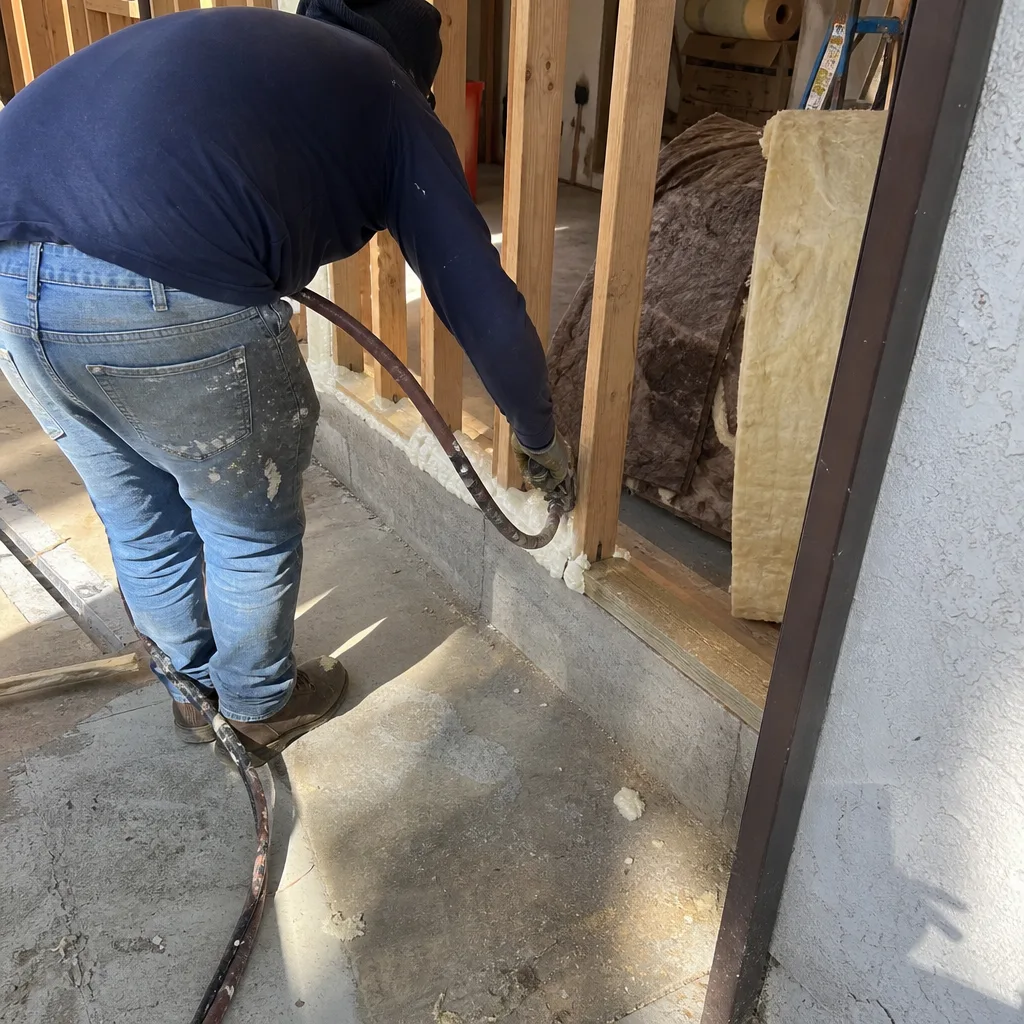
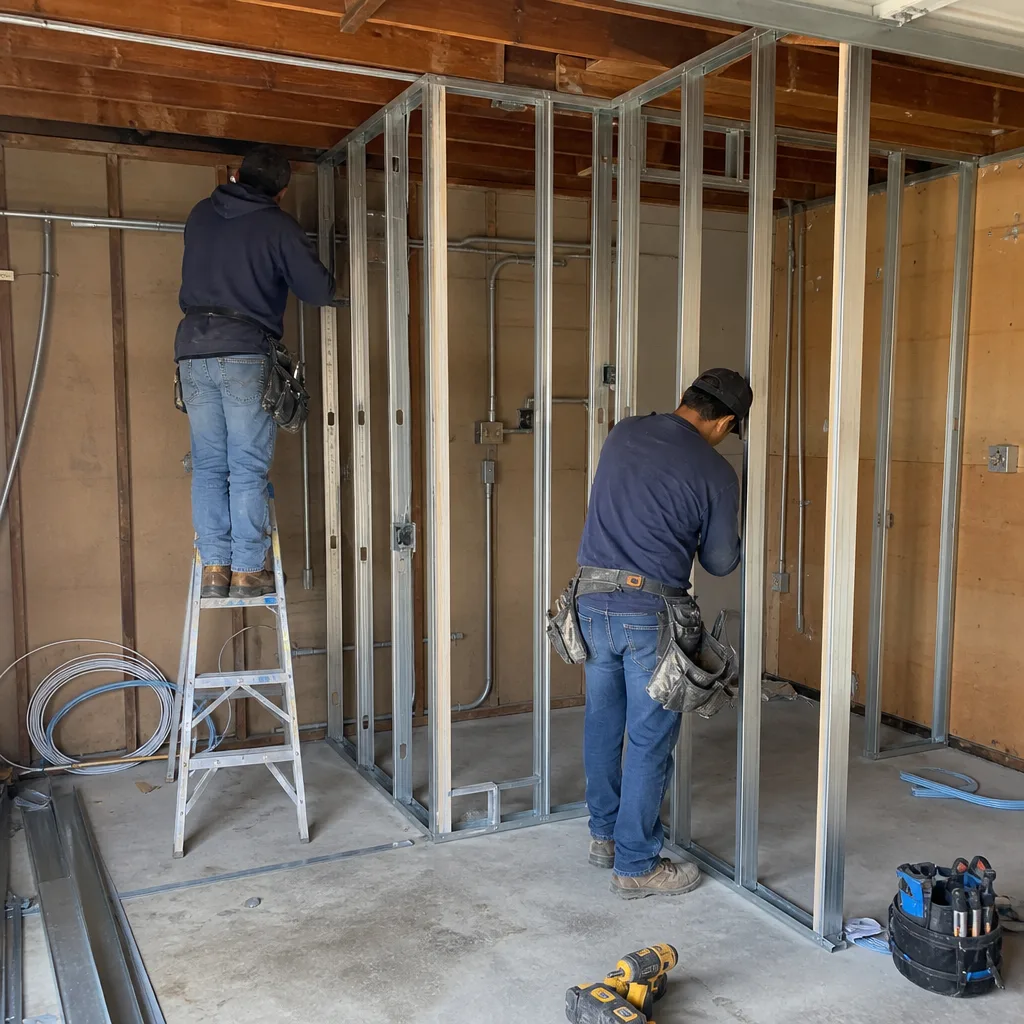
Our crews photograph every phase: pre-construction site conditions, excavation, foundation, framing, MEP rough, insulation, and final walk. You receive these photos with written notes, not a verbal summary. If a question arises about whether a condition was pre-existing or caused during construction, the photo record answers it. This matters for cost disputes. A photo of the existing slab thickness, dated and geotagged, prevents a $10,000 foundation upgrade from becoming a finger-pointing exercise.
Clause 5: No Surprises (Scope Locked at Signing)
The scope of work is locked at contract. No door-side upsells. No “while we’re here” additions billed at open-ended rates. If you request a change, we price it in writing before the work proceeds, and you sign a change order. This is standard in commercial construction. It should be standard in residential ADU work. It rarely is.
Clause 7: 365-Day Done Right Promise
If the finished ADU is not built to the permitted drawings and specifications, we make it right. For one year from certificate of occupancy. This covers workmanship defects, material failures, and deviations from the approved plan set. It does not cover owner-caused damage or normal wear. The promise is in writing, not a verbal assurance, and it is transferable if you sell the property within the coverage period.
Exclusions Where Cost Variation Is Disclosed Upfront
Even with a fixed-price contract, some conditions cannot be fully priced until uncovered. We disclose these explicitly:
- Unknown subsurface conditions: Rock, groundwater, or undocumented utility lines encountered during excavation. We price standard excavation; we quote rock or dewatering as a pre-negotiated rate per occurrence, not a blank check.
- Asbestos or lead: Pre-1978 structures may contain these. We test during due diligence. If found, abatement is a separate line item, quoted by a licensed abatement contractor, not hidden in our construction price.
- HOA requirements beyond code: Some Moreno Valley HOA communities impose design review fees, additional setbacks, or material restrictions. We verify HOA CC&Rs during design; any HOA-mandated upgrades are your choice and your cost.
- Owner-supplied fixtures or appliances: If you supply a fixture, we install it at our standard labor rate but do not warranty the fixture itself. We recommend against owner-supplied HVAC or water heaters due to warranty complexity.
The Haven Standard is not a marketing document. It is the contract you sign. Every clause is numbered and referenced in the project binder you receive at closeout.
Financing and Permits in Moreno Valley
Understanding cost is only useful if you can access the capital to pay it. Moreno Valley homeowners have several paths, and the right one depends on your equity position, credit profile, and timeline.
Common ADU Financing Paths
- Home Equity Line of Credit (HELOC): Best for homeowners with significant equity and a clear project timeline. Rates are variable, so budget for rate movement during the 10-14 month build. Most of our clients in Moreno Valley use HELOCs for garage conversions and smaller detached units.
- Cash-Out Refinance: Locks a fixed rate but resets your primary mortgage term. Makes sense if your current rate is above 6% and you planned to refinance anyway. Less attractive if you bought or refinanced at 3% during 2020-2021.
- ADU-Specific Construction Loan: A few California lenders now offer products designed for ADUs, with interest-only draws during construction and conversion to amortizing at certificate of occupancy. These typically require 20% to 25% equity post-project and a fixed-price contract, which our Haven Standard satisfies.
- CalHFA ADU Grant: The California Housing Finance Authority offers grants up to $40,000 for pre-development and non-recurring closing costs. Income limits apply. This is not a loan; it does not reduce your construction cost, but it covers soft costs that would otherwise come from savings.
Moreno Valley Permit Timeline
Moreno Valley Development Services operates under state SB 9 and SB 10 mandates, which require ministerial approval of compliant ADU applications within 60 days. In practice, a complete, accurate submittal moves through plan check in 45 to 60 days. An incomplete submittal, or one that requires correction cycles, stretches to 90 to 120 days. The difference is the quality of the permit set.
Our ADU Design & Permitting in Moreno Valley process includes a pre-submittal conference with the city planner to confirm zoning, setbacks, and utility requirements before the drawings are finalized. This catches conflicts early, when they are lines on paper, not forms in a correction letter. Since 2015, our first-round approval rate has exceeded 90%. Each avoided correction cycle saves two to four weeks and $500 to $1,500 in revised engineering.
Common Mistakes to Avoid
- Comparing headline per-square-foot numbers without demanding line items. A $250/sq ft quote that excludes design, permits, and utilities is not cheaper than a $380/sq ft quote that includes them. It is less honest. Demand the table.
- Assuming a garage conversion avoids foundation costs. Most Moreno Valley garages built before 1990 have slabs too thin for habitation. The conversion estimate must include slab evaluation and potential replacement, or it is incomplete.
- Ignoring Eastern Municipal Water District connection requirements. Water and sewer are often the largest variable cost. A builder who quotes $5,000 without pulling the utility map is guessing. We pull the map during due diligence and quote what we find.
- Neglecting the school fee. Some homeowners budget for construction and forget the Moreno Valley Unified School District impact fee. It is not optional, and it is not small. Include $3,000 to $5,500 in every budget.
- Choosing finishes before locking structural scope. Tile and countertop selections are fun. Foundation type and panel capacity are not. But the structural decisions determine whether the finish budget is spendable. We sequence decisions accordingly.
- Accepting a “call for quote” builder for a six-figure project. If a builder will not put a written price in front of you before work starts, you do not have a price. You have a conversation. Haven Standard Clause 1 exists because we believe this is non-negotiable.
- Building without a contingency. Even on well-investigated lots, something surprises you. A 10% contingency is not pessimism. It is professionalism. We hold it in escrow and release it only for documented, approved changes.
When to Call a Professional
Call a design-build studio when you need a single point of accountability for a project that crosses architecture, engineering, permitting, and construction. The designer-versus-builder blame gap derails more ADUs in Moreno Valley than any single technical issue. We have been called in to rescue projects where the architect’s drawings could not be built as drawn, or where the builder deviated from the drawings and the architect disclaimed responsibility. The cost of untangling these disputes exceeds the cost of hiring a single-contract studio from the start.
Specifically, contact Ellery ADU Studio Moreno Valley if your lot has slope, suspect soils, an aging garage, or utility access questions. These are not DIY investigations, and the wrong assumption becomes a $15,000 change order. We offer free estimates in Moreno Valley, and we provide a Free Second Opinion on any written estimate already in hand. Call (951) 379-3047 to schedule.
Frequently Asked Questions
A complete 600 square foot detached ADU in Moreno Valley typically costs $195,000 to $285,000 all-in, including design, permitting, site prep, construction, and a 10% contingency. The low end assumes a flat lot with standard soils; the high end assumes slope, expansive soils, or long utility extensions. Call (951) 379-3047 for a written line-item estimate specific to your lot.
Under Haven Standard Clause 5, the scope and price are locked at contract signing. The only changes are owner-requested upgrades or documented unforeseen conditions, priced in writing before work proceeds. No door-side upsells, no scope creep.
We pull all permits as part of our single-contract service. This includes building, plumbing, electrical, mechanical, and any required zoning clearances. You receive copies of every permit and approval in your project binder at closeout.
From signed contract to certificate of occupancy, a garage conversion takes 6 to 9 months, a JADU takes 4 to 7 months, and a new detached ADU takes 10 to 14 months. Design and permitting add 3 to 5 months before construction begins. Timeline depends on plan check cycles, weather, and material lead times.
Yes, if you have sufficient equity. Home values in Moreno Valley have stabilized since 2022, and many homeowners have 20% to 40% equity even after recent rate increases. We can introduce you to lenders familiar with ADU-specific products, including construction-to-permanent loans that use the post-build appraised value.
The difference is what is included. A $250/sq ft quote often covers only rough construction, excluding design, permits, utilities, and finishes. When those are added, the true cost approaches or exceeds our all-in price. Our written quote under Haven Standard Clause 1 includes every category, so you compare total project cost, not a partial number. We also offer a Free Second Opinion on any written estimate already in hand.
The Bottom Line
ADU costs in Moreno Valley are knowable, itemizable, and fixable in writing before any work begins. The $195,000 to $285,000 range for a 600 square foot detached unit is not a guess. It is built from 900+ projects since 2015, each with a documented photo record and a written price that did not change without a signed change order. The key is refusing to compare incomplete numbers. Demand the line-item table. Know which costs are fixed by city and state fee schedules and which move with your lot. Choose a single-contract design-build model that eliminates the designer-versus-builder gap. And never start a six-figure project without a written fixed price that names every category, including the ones that arrive as surprises elsewhere. Explore more guides & resources on planning, budgeting, and building ADUs in California.
Call (951) 379-3047 to schedule your free estimate. We will walk your lot, pull the utility maps, and return a written line-item quote under Haven Standard Clause 1. No voicemail queue. A live person answers 24/7.
Written by Nadia Ellery, Owner at Ellery ADU Studio Moreno Valley, serving Moreno Valley since 2015.