
Last updated September 25, 2026
The Complete Guide to ADU in Moreno Valley
Moreno Valley processed fewer than 60 ADU permits in 2022 despite sitting in one of the Inland Empire’s fastest-growing housing markets. The gap isn’t demand. It’s incomplete information stopping owners at step one, before they know whether their lot qualifies, what the city will charge, or how long they’ll wait in plan check. This guide maps the actual Moreno Valley Development Services workflow, fee schedule, and site constraints that determine whether a project pencils out before a dollar is spent on design, and points you to more guides & resources for every stage of your project. You’ll learn the specific zoning overlays that kill feasibility, the line-item fees with 2024 figures, the permit documents reviewers flag most often, and the real all-in cost range from site evaluation to certificate of occupancy for a typical detached unit.
Quick Answer
Building an ADU in Moreno Valley requires navigating city-specific zoning overlays, a multi-stage Development Services review, and fees that typically total $8,000-$15,000 before construction begins. A complete 600 sq ft detached ADU, from site evaluation through final inspection, generally runs $180,000-$280,000 all-in in the Moreno Valley market, with plan-check turnaround averaging 6-10 weeks as of 2024.
Table of Contents
- Zoning Overlays That Change Feasibility Before Design Begins
- Moreno Valley’s Fee Schedule: Line by Line
- Plan-Check Turnaround and What It Means for Your Timeline
- The Permit Set Documents Moreno Valley Flags Most Often
- Real All-In Costs: From Site Evaluation to Certificate of Occupancy
- Prefab and Modular Systems in Moreno Valley
- Common Mistakes to Avoid
- When to Call a Professional
- Frequently Asked Questions
Zoning Overlays That Change Feasibility Before Design Begins
Most ADU guides start with square footage limits and setback rules. In Moreno Valley, that’s backwards. Three zoning overlays can disqualify a lot before you sketch a floor plan, and the city won’t process your pre-application until you’ve cleared them.
Flood Zones and the Box Springs Wash Corridor
Moreno Valley sits at the junction of the Box Springs Wash and Sunnymead Wash, both tributaries of the Santa Ana River. FEMA maps show substantial AE and AH flood zones through the northern and eastern portions of the city, including pockets near March Air Reserve Base and along the 215 corridor. An ADU in an AE zone requires elevation certificates, floodproofing documentation, and additional engineering review. We’ve seen owners spend $3,000-$5,000 on preliminary surveys only to learn their finished floor must sit 18 inches above base flood elevation, making a garage conversion physically impossible without raising the slab. The city cross-references FEMA panels directly in pre-application; check FEMA’s Map Service Center before engaging a designer.
Hillside Development Overlay
Slopes exceeding 25% trigger Moreno Valley’s Hillside Development Overlay, which applies to significant portions of the Box Springs Mountain area and the terraced neighborhoods south of Ironwood Avenue. The overlay mandates geotechnical reports, retaining wall engineering, and often revised access routes for construction equipment. A standard detached ADU on flat land might need 40-50 pages of structural drawings. The same unit on a hillside lot can require 120+ pages, with retaining walls that cost more than the ADU itself. In our experience, hillside lots in Moreno Valley add 8-14 weeks to permitting and $25,000-$60,000 to construction.
HOA-Exempt Parcels and the Surprise Benefit
California’s AB 670 and SB 896 prohibit HOAs from flatly banning ADUs, but many Moreno Valley owners don’t realize their specific parcel’s status. Several neighborhoods built in the 1980s and 1990s, including portions of Rancho Belago and the newer developments east of Lasselle Street, carry CC&Rs that predate state preemption. The city will issue permits regardless, but an HOA can impose design guidelines, parking requirements, or aesthetic rules that functionally alter your project scope. Conversely, some older neighborhoods in the Sunnymead area and near downtown Moreno Valley lack active HOAs entirely. These parcels move faster through design because there’s no third-party review layer. Check your preliminary title report for CC&R expiration dates; many 40-year-old covenants have lapsed without renewal.
Utility Service Capacity
Moreno Valley’s eastern and southern edges, particularly south of Cactus Avenue and east of Perris Boulevard, were built with 3/4-inch water mains sized for single-family demand. An ADU typically requires a 1-inch meter minimum, and the city will not approve water availability until Western Municipal Water District confirms capacity. We’ve encountered six-month delays while WMWD upsized mains at the owner’s expense. Verify water capacity in your pre-application; it’s not automatic.
Moreno Valley’s Fee Schedule: Line by Line
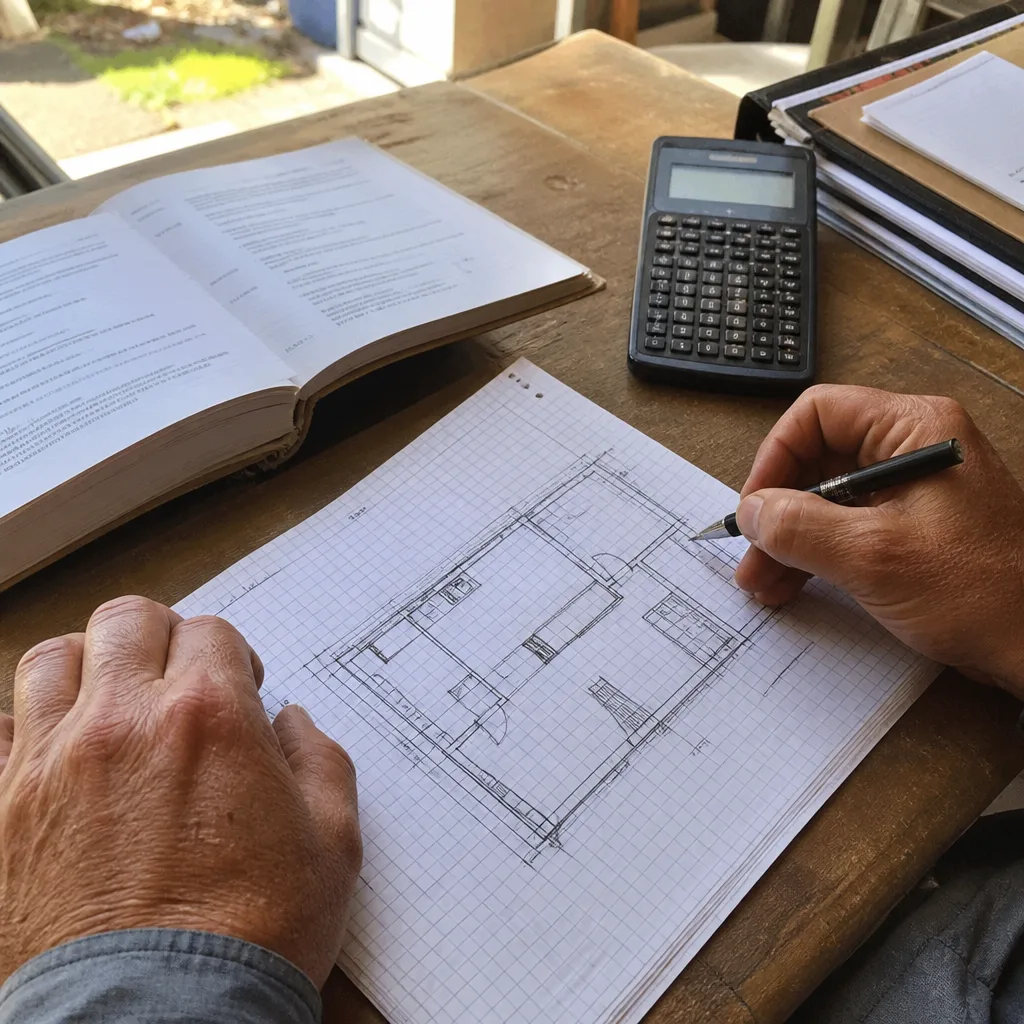
Moreno Valley Development Services publishes fee schedules, but the effective total often surprises owners who budgeted for construction alone. Here’s the 2024 line-item breakdown for a typical 600 sq ft detached ADU on a flat, non-hillside lot in a standard residential zone.
| Fee Category | 2024 Amount | Notes |
|---|---|---|
| Plan Check (Building) | $1,800-$2,400 | Based on valuation; $2.10 per $1,000 of construction value, minimum $1,200 |
| Plan Check (Plumbing) | $350-$500 | Per fixture count; typical ADU has 3-4 fixtures |
| Plan Check (Electrical) | $300-$450 | Based on service panel and circuit count |
| Building Permit | $2,800-$3,600 | $3.25 per $1,000 of valuation; 600 sq ft at $200/sf = $120,000 valuation |
| Plumbing Permit | $400-$550 | Including sewer connection review |
| Electrical Permit | $350-$480 | 200-amp service typical for ADU with HVAC |
| School Fees (State Mitigation) | $3.88/sf | $2,328 for 600 sq ft; mandatory, no exemptions for ADUs under 750 sq ft in Moreno Valley |
| Traffic Impact Fee | $0 | Waived for ADUs under 750 sq ft per city resolution 2023-045 |
| Parkland Dedication (In-Lieu) | $0 | Waived for ADUs per state law |
| Utility Connection (Water) | $1,200-$2,800 | Varies by meter size and distance to main; capacity upsizing extra |
| Utility Connection (Sewer) | $800-$1,500 | Tie-in to existing lateral if capacity allows |
| Fire Department Plan Review | $250-$400 | Required for detached units over 500 sq ft or with specific setbacks |
| Inspection Fees | $600-$900 | Typically 6-10 inspections; re-inspection at $150 if failed |
| Subtotal (Typical Range) | $8,778-$14,408 | Before construction; assumes no flood zone, no hillside, no capacity upsizing |
These figures exclude design and engineering fees, which typically add $8,000-$18,000 for a custom detached ADU in Moreno Valley. The city accepts no payment plans; all plan-check fees are due at submittal, and permit fees are due at issuance. Budget for the high end of each range; we’ve never seen a project hit the low end on first submission.
Plan-Check Turnaround and What It Means for Your Timeline
Moreno Valley’s Development Services Department staffs four building plan examiners for the entire city, covering commercial, residential, and ADU review. As of late 2024, first-round plan-check turnaround for ADUs averages 6-10 weeks, with complex projects (hillside, flood zone, non-conforming lots) stretching to 14 weeks.
This matters for project sequencing. Riverside, immediately to the north, averages 4-6 weeks for ADU plan check with a dedicated ADU fast-track lane. Corona and Norco run 5-8 weeks. Moreno Valley’s longer timeline isn’t a dysfunction; it’s a function of staffing and volume. The city processed 89 ADU permits in 2023, up from 58 in 2022, but examiner headcount hasn’t increased proportionally.
What the Timeline Means for Financing
Construction loans typically lock for 90-120 days. If your plan check takes 10 weeks and returns with corrections requiring 3-4 weeks of revision and re-submittal, you’re at 14 weeks before breaking ground. Many Moreno Valley owners we’ve worked with have needed to extend rate locks or re-qualify, adding cost and stress. The solution is a complete first submission, which we’ll address in the next section.
Expedited Review: Not Available
Moreno Valley does not offer expedited ADU plan check for additional fees, unlike some jurisdictions. The queue is strictly first-in, first-out. Pre-application meetings, however, are available and strongly recommended. A 30-minute pre-app with the senior planner can surface issues that would otherwise trigger a correction cycle. We schedule these for every Moreno Valley project before finalizing the permit set.
The Permit Set Documents Moreno Valley Flags Most Often
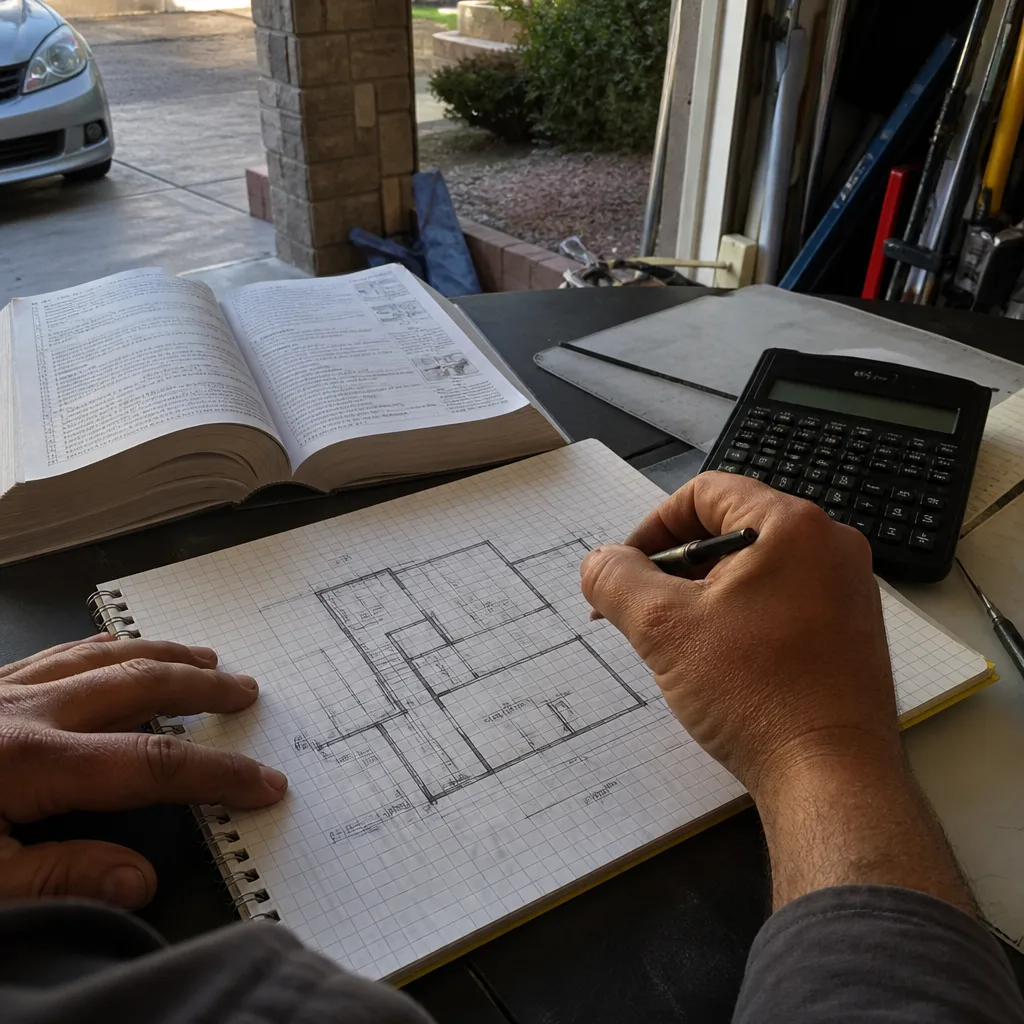
A complete permit set eliminates the second round of plan check that kills timelines. Moreno Valley reviewers flag the same omissions repeatedly. Here’s what we include in every submittal, and what we’ve learned from 900+ ADUs across Southern California about what this city specifically watches.
- Site plan with accurate topography. Moreno Valley requires contour intervals of 2 feet or less. Hand-drawn sketches from online tools are rejected. We use survey-grade topography, even on flat lots, because reviewers cross-check finish-floor elevations against FEMA panels.
- Floor plans with room labels and square footage calculations. The city calculates net square footage differently than gross; we label both. A 600 sq ft gross unit often nets 540-560 sq ft under their method, which affects fee calculation and compliance with maximum size.
- Elevation drawings showing all four sides. Moreno Valley enforces design guidelines in specific neighborhoods, including the March Field Heritage area and certain Rancho Belago tracts. Elevations must show materials, colors, and roof pitch. We specify James Hardie siding with color codes on the drawings when matching existing residence aesthetics.
- Foundation and structural plans with engineer’s stamp. The city does not accept prescriptive tables for ADU foundations; engineered plans are mandatory. This includes lateral bracing calculations for the Inland Empire’s seismic zone. We use a structural engineer licensed in California, with specific Moreno Valley submittal experience.
- Title 24 Energy Compliance documentation. Moreno Valley requires the CF-1R and CF-6R forms, not just a HERS rater summary. We complete these in-house; incomplete energy docs are the single most common reason for first-round rejection.
- Water and sewer connection details with capacity letters. Western Municipal Water District and the city’s sewer department must confirm capacity in writing. We obtain these letters before submittal; reviewers will not proceed without them.
- Fire separation details for attached ADUs and garage conversions. One-hour fire-rated assemblies between ADU and existing structure, with specific UL-listed assemblies cited. Generic “1-hour rated” notes are rejected.
- HOA acknowledgment or exemption documentation. Even for HOA-exempt parcels, we include a title report excerpt showing no active CC&Rs, or a letter from the HOA acknowledging the project. Reviewers have started requesting this proactively since 2023.
A permit set with these eight elements complete typically passes first round in Moreno Valley. Missing any one triggers a correction letter, 3-4 weeks of revision, and re-queueing at the back of the line.
Real All-In Costs: From Site Evaluation to Certificate of Occupancy
Owners researching ADU costs in Moreno Valley encounter figures that range from $80,000 to $400,000 with no explanation of what’s included. Here’s the actual breakdown for a 600 sq ft detached ADU on a flat, standard lot, based on projects we’ve designed, permitted, and built in the city.
Pre-Construction: $12,000-$28,000
- Site evaluation and feasibility study: $800-$1,500
- Survey and topography: $1,200-$2,500
- Design and permit set (architectural, structural, MEP): $8,000-$18,000
- Soils report (if required): $1,500-$3,500
- Pre-application meeting and city fees: $500-$800
- Geotechnical (hillside only): $3,000-$8,000 additional
City Fees: $8,800-$14,400
As detailed in the fee schedule section above.
Construction: $150,000-$220,000
- Site prep and utilities: $15,000-$30,000
- Foundation and slab: $18,000-$28,000
- Framing and structural: $25,000-$40,000
- Exterior envelope (roof, siding, windows): $22,000-$35,000
- MEP rough and finish: $18,000-$28,000
- Interior finish (flooring, cabinets, fixtures): $20,000-$32,000
- HVAC: $6,000-$10,000
- Appliances: $3,000-$7,000
- Landscaping and hardscape (required): $4,000-$8,000
- Contingency (10%): $13,000-$22,000
Post-Construction: $2,000-$4,000
- Final inspections and certificate of occupancy: $500-$900
- Utility meter set and activation: $800-$1,500
- Final survey and as-builts: $700-$1,600
Total all-in range: $172,800-$266,400
We quote every Moreno Valley project with a written price before any work begins, per Haven Standard Clause 1. The range above reflects actual variability in site conditions, material selections, and finish levels. A new detached ADU in Moreno Valley at the entry level, with standard finishes and no site complications, typically lands near $180,000. High-end finishes, hillside lots, or significant utility work push toward $280,000.
Garage conversions in Moreno Valley run lower because the envelope exists. A garage conversion ADU in Moreno Valley typically ranges $85,000-$150,000 all-in, including the structural upgrade to the existing slab, fire separation, and MEP extension. The permit set is simpler, city fees are lower, and construction duration is 60-90 days versus 4-6 months for detached.
Prefab and Modular Systems in Moreno Valley
Prefab and modular ADUs have matured significantly since 2020. Several systems now deliver factory-built units that meet California’s Title 24 and HCD standards, with installation timelines of 2-4 weeks versus 4-6 months for stick-built. In Moreno Valley, prefab viability depends on three site-specific factors: access for crane or flatbed delivery, foundation compatibility, and whether the city’s plan check treats the system as a manufactured dwelling or site-built structure.
We’ve specified and coordinated Abodu, Cover, and Mighty Buildings units within our single-contract design-build model. Each has distinct implications for Moreno Valley projects.
Abodu units arrive nearly complete on a flatbed, requiring crane placement onto a pre-poured foundation. In Moreno Valley’s narrower lots, particularly in the older Sunnymead neighborhoods with 50-foot frontages, crane swing radius can be tight. We verify utility line clearance and neighbor access agreements before specifying Abodu. Their 500 sq ft one-bedroom unit typically runs $185,000-$220,000 installed, including foundation and utility connections, which sits in the middle of our custom build range with faster completion.
Cover uses a panelized system assembled on-site, which avoids crane constraints but requires more site labor. Their units integrate well with hillside lots where crane access is impossible; we’ve used Cover on two Moreno Valley hillside projects where traditional prefab was ruled out. The trade-off is 6-8 weeks of on-site assembly versus 2-3 days for a fully modular drop.
Mighty Buildings prints structural elements using proprietary composite materials, producing units that are lighter than conventional construction. This matters in Moreno Valley for foundation cost on expansive soils, which are common in the Box Springs area. A lighter structure can reduce foundation depth and reinforcement, saving $3,000-$8,000 on sites with moderate expansive soil conditions. Mighty Buildings is still scaling California delivery; lead times run 8-12 months versus 4-6 months for Abodu.
The critical point: prefab is not automatically cheaper. It’s faster and more predictable. Under Haven Standard Clause 1, we quote prefab and custom options with the same written-price guarantee, so owners can compare accurately. The ADU design and permitting in Moreno Valley process differs slightly for prefab, with additional HCD compliance documentation, but we handle this within the same single contract.
Common Mistakes to Avoid
- Assuming your lot qualifies because your neighbor has an ADU. Moreno Valley’s zoning overlays vary block by block. We’ve seen adjacent parcels where one sits in an AE flood zone and the other doesn’t. Verify your specific APN before budgeting.
- Budgeting construction costs only. City fees, design, and pre-construction typically add 15-25% on top of construction. Owners who budget $150,000 for construction and ignore the rest find themselves $30,000-$50,000 short before breaking ground.
- Submitting incomplete permit sets to “get in queue.” Moreno Valley does not hold your place with incomplete submittals. An incomplete set is rejected outright, and you re-enter at the back. We complete every document before submittal; the time “saved” by early submission is lost to re-queueing.
- Ignoring Western Municipal Water District capacity. WMUD operates independently of city planning. Their capacity letters take 2-4 weeks and can kill a project if mains need upsizing. We request these before design finalization, not after permit submittal.
- Choosing a designer and builder separately. The designer blames the builder for constructability; the builder blames the designer for missing details. Our Ellery ADU Studio Moreno Valley home model eliminates this gap with one contract, one written price, and no finger-pointing.
- Neglecting the 365-day warranty documentation. California requires specific warranty language for ADUs. We provide this in writing before construction starts, with photo documentation at every phase, so there’s no dispute about what was built versus what was promised.
- Overbuilding for the rental market. Moreno Valley’s ADU rental rates run $1,200-$1,800 for a studio, $1,500-$2,200 for a one-bedroom. A $280,000 ADU with high-end finishes rarely cash-flows against these rents. We help owners right-size finishes to their actual use case, whether that’s rental income, family housing, or future sale value.
When to Call a Professional
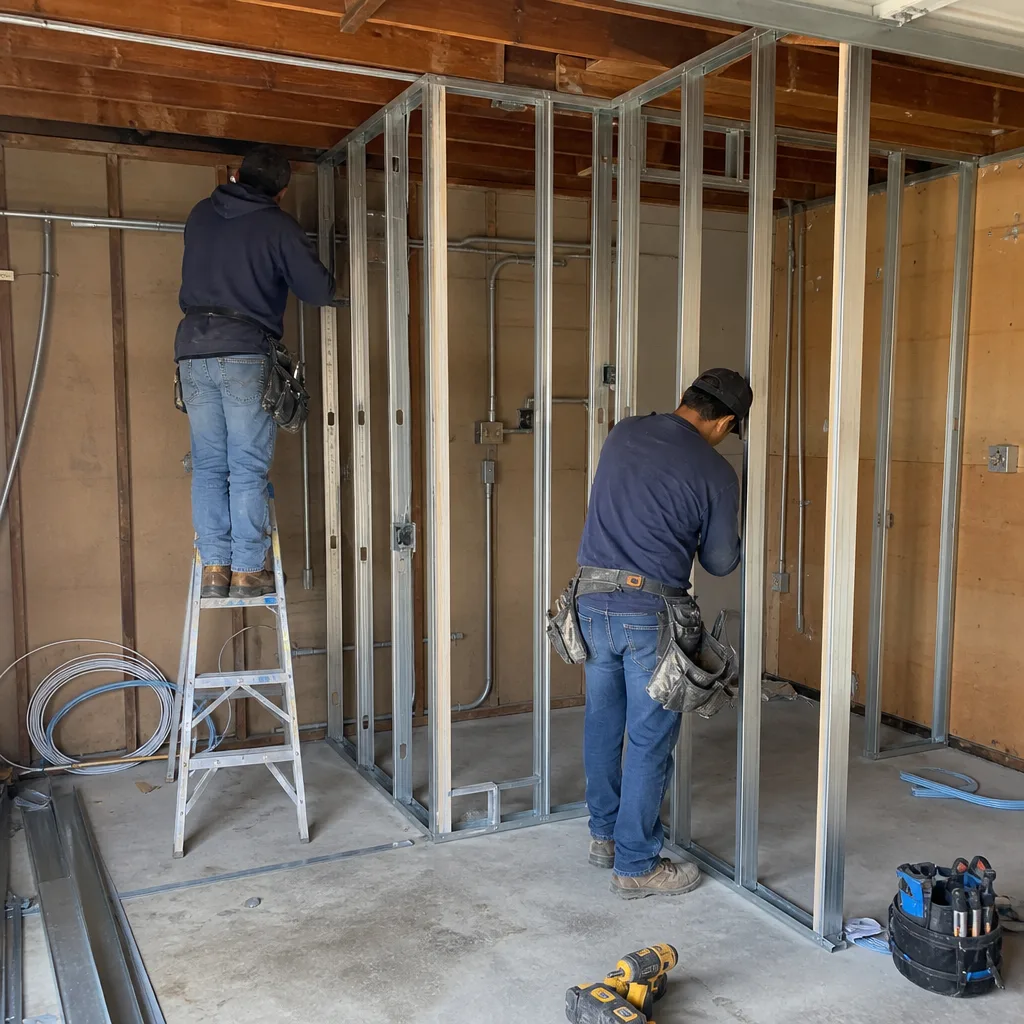
Call a design-build studio when your lot has any complexity overlay, when you need a written price before committing funds, or when you’ve already received an estimate that lacks line-item detail; see our DIY vs Professional ADU: The Moreno Valley Homeowner’s Decision Guide to weigh your options. The point where most Moreno Valley owners get stuck is between feasibility curiosity and actual budgeting. A site evaluation resolves this in 45 minutes, with documented findings you can use whether you proceed or not.
Ellery ADU Studio Moreno Valley offers free estimates in Moreno Valley. Every estimate includes a written scope, a documented photo record of existing conditions, and a fixed price governed by Haven Standard Clause 1. No call-for-pricing, no range that shifts later. Call (951) 379-3047 to schedule your site evaluation.
Frequently Asked Questions
A 600 sq ft detached ADU typically costs $180,000-$280,000 all-in, from site evaluation through certificate of occupancy, while a garage conversion ADU runs $85,000-$150,000. The final figure depends on site conditions, finish level, and whether your lot triggers flood zone or hillside overlays. Call (951) 379-3047 for a written estimate specific to your property.
Plan-check turnaround averages 6-10 weeks for a complete first submission, with complex projects extending to 14 weeks. Add 3-4 weeks for revisions if the initial submittal is incomplete. Pre-application meetings and complete permit sets are the two factors most within an owner’s control to avoid delays.
State law guarantees ADU rights on most single-family and multifamily lots, but Moreno Valley’s specific zoning overlays, flood zones, hillside development areas, and utility capacity constraints can limit feasibility on individual parcels. A pre-application review confirms whether your specific APN qualifies.
City fees for a typical 600 sq ft detached ADU total $8,000-$15,000, including plan check, building permit, plumbing and electrical permits, school fees, utility connections, and inspections. This excludes design, engineering, and construction costs. See the fee schedule table above for 2024 line-item figures.
Yes, garage conversions are permitted under state law and Moreno Valley’s municipal code, provided the existing structure meets minimum standards for ceiling height, foundation capacity, and fire separation. Many garages in Moreno Valley’s 1970s-1990s neighborhoods require slab reinforcement and roof structure upgrades. A site evaluation determines what’s needed.
California assesses ADUs based on construction cost added to the existing property value, not a full reassessment. In Moreno Valley, expect roughly $1,000-$2,500 in additional annual property taxes for a $150,000-$250,000 ADU, depending on Riverside County’s current assessment ratio and any applicable exemptions.
The Bottom Line
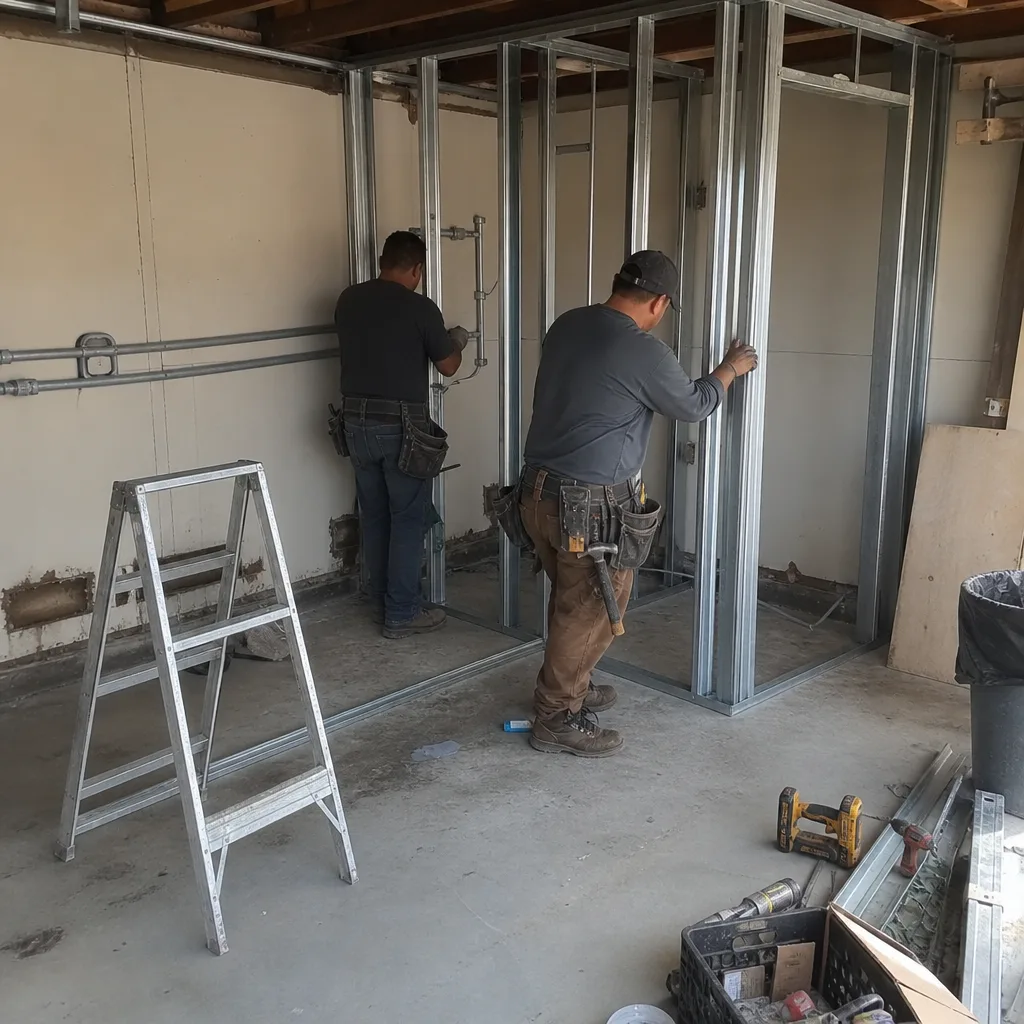
Building an ADU in Moreno Valley is feasible, financeable, and increasingly common, but the gap between interested owners and permitted projects is information, not demand. Success requires mapping your specific lot’s overlays early, budgeting for true all-in costs including city fees and pre-construction, submitting a complete permit set the first time, choosing a delivery model that eliminates designer-builder conflict, and following Seasonal ADU Care for Moreno Valley: Year-Round Homeowner’s Guide to protect your investment after move-in. The owners who move smoothly through the process treat the permit set as the core product and the construction as its execution. Those who rush past feasibility and design pay for it in correction cycles, change orders, and timeline extensions.
Written by Nadia Ellery, Owner at Ellery ADU Studio Moreno Valley, serving Moreno Valley since 2015.