
Last updated September 25, 2026
Seasonal ADU Care for Moreno Valley: Year-Round Homeowner’s Guide
A mini-split system sized for a coastal California ADU will underperform in Moreno Valley’s summer peak load by 15-20% - and the HVAC manufacturer’s warranty clause on “improper application” is the first thing a service tech cites when it fails in August. That’s not a guess. We’ve seen it on warranty calls where the unit was spec’d for Santa Monica conditions and installed in Sunnymead Ranch. This guide maps what to do, when to do it, and what to document - alongside our ADU Design & Permitting Maintenance Checklist for Moreno Valley Homeowners - so your ADU’s systems stay in warranty and your utility bills don’t spike. You’ll get a month-by-month task calendar built for Moreno Valley’s actual climate - not generic “Southern California” advice - plus the specific Santa Ana wind prep, winter pipe protection, and permit-adjacent service intervals that most homeowners miss.
Quick Answer
Seasonal ADU care in Moreno Valley means calibrating maintenance to three distinct climate stressors: summer cooling loads that exceed coastal specs by 15-20%, Santa Ana wind events from October through March that test exterior finishes and vents, and 10-15 nights annually below freezing that can split water lines in unconditioned utility spaces. The core rhythm is monthly HVAC filter checks, quarterly exterior inspections, pre-winter pipe insulation, and documented annual service by a licensed technician to preserve manufacturer warranties.
Table of Contents
- Why Moreno Valley Climate Breaks Generic ADU Advice
- Month-by-Month Maintenance Calendar
- Summer Cooling Load Management
- Santa Ana Wind Season Prep
- Winter Freeze Protection for Pipes and Water Heaters
- Warranty Documentation and Service Intervals
- Common Mistakes to Avoid
- When to Call a Professional
- Frequently Asked Questions
- The Bottom Line
Why Moreno Valley Climate Breaks Generic ADU Advice
Most ADU maintenance guides assume coastal Southern California. That assumption costs Moreno Valley homeowners money, as our ADU Cost Breakdown: The Moreno Valley Homeowner’s Reference for 2026 clearly shows.
Moreno Valley sits at roughly 1,500 feet elevation in the Inland Empire, east of the Santa Ana Mountains. Summer daily highs routinely hit 100°F from July through September. Winter lows drop below 32°F on 10-15 nights per year, typically between December and February. The Santa Ana wind season runs October through March, with gusts exceeding 50 mph that drive dust, debris, and ember risk through vent screens and exterior gaps.
These three factors create maintenance tasks that simply don’t exist for coastal ADUs:
- Oversized cooling load: East-facing lots in neighborhoods like Box Springs and Moreno absorb morning sun directly into ADU windows and walls, extending the cooling demand curve by 3-4 hours compared to west-facing coastal properties.
- Thermal cycling stress: Daily swings of 30-40°F between summer highs and overnight lows fatigue caulking, sealants, and roofing fasteners faster than the mild coastal range of 15-20°F.
- Wind-driven moisture and debris: Santa Ana events push fine dust through standard vent screens, coating condenser coils and clogging bathroom exhaust fans - problems rare in marine-layer climates.
Manufacturer warranties reflect this geography whether homeowners know it or not. Ellery ADU Studio Moreno Valley specifies equipment for Inland Empire design conditions on every project, but maintenance records must prove that equipment was serviced within those conditions. A warranty claim denied for “improper application” often traces back to a homeowner who skipped documented annual service or used a filter rating that restricted airflow below manufacturer spec.
Month-by-Month Maintenance Calendar
This calendar is built from Moreno Valley’s actual NOAA climate data and our field records from 900+ ADUs since 2015. Tasks cluster around predictable stress windows rather than spreading evenly through the year.
January-February: Freeze Watch and Post-Holiday Systems Check
- Inspect pipe insulation in unconditioned spaces. ADU water lines running through garage conversions or detached unit crawl spaces are vulnerable during the 10-15 nights below freezing. Look for gaps at joints, valves, and where pipes penetrate walls. In Moreno Valley’s Meadowbrook neighborhood, we’ve found that builder-grade pipe wrap degrades after 3-4 seasons of UV exposure in partially enclosed utility areas.
- Test water heater pressure relief valve. Cold inlet water temperature drops in winter increase thermal expansion stress. Document the test date; tank manufacturers typically require annual relief valve testing for warranty coverage.
- Check exterior caulking around windows and doors. Thermal cycling from December cold snaps to January Santa Ana warm spells opens gaps that admit dust and reduce HVAC efficiency.
March-April: Transition to Cooling Season
- Schedule licensed HVAC service before the May price surge. Moreno Valley HVAC contractors book solid by mid-April. Early scheduling gets technician attention and often better rates.
- Replace mini-split filters and clean condenser coils. Santa Ana dust accumulation over winter reduces airflow 8-12% by March, per our blower door test records.
- Inspect roof and flashing. Winter wind events loosen fasteners; spring rains (when they come) find the gaps. Document with photos for warranty files.
May-June: Pre-Summer Load Verification
- Verify thermostat programming reflects actual occupancy. Guest ADUs often run on schedules set during construction; update them for real use patterns.
- Check attic radiant barrier integrity if installed. Staple-down barriers in Moreno Valley’s older ADU stock can sag or tear, reducing effectiveness by 30-40% just when cooling load peaks.
- Inspect exterior paint and sealant on south and east walls. These surfaces take the hardest thermal load; early intervention prevents substrate damage.
July-September: Peak Load Management
- Replace filters monthly. Dust load is highest; restricted airflow in 100°F conditions can trigger high-pressure lockouts and compressor damage.
- Monitor condensate drain lines weekly. High humidity from evaporative cooling loads can overwhelm drains; algae growth in stagnant lines is common in Moreno Valley’s hard water.
- Inspect window and door weatherstripping. Thermal expansion opens gaps that admit 100°F air directly into conditioned space.
October: Santa Ana Wind Season Prep
- Secure or replace vent screens with corrosion-resistant mesh. Standard aluminum mesh fatigues in Santa Ana wind; stainless or epoxy-coated steel lasts 2-3x longer in Moreno Valley conditions.
- Trim vegetation within 10 feet of ADU. Embers travel farther than flames; this is defensible space practice, not aesthetics.
- Inspect and reseal roof penetrations. Wind uplift tests fasteners; October is the last comfortable window before winter.
November-December: Winterization and Documentation
- Drain and insulate exterior hose bibs and irrigation lines. Moreno Valley’s hard freeze nights typically arrive mid-December without warning.
- Compile annual service records for warranty files. Manufacturer warranty claims require dated, technician-signed documentation; December is the natural audit month.
- Test emergency heating in ADUs with electric baseboard backup. Guest units may sit unoccupied; verify function before holiday visitors arrive.
Summer Cooling Load Management
Moreno Valley’s summer cooling challenge is not just temperature - it’s the combination of temperature, solar orientation, and thermal mass that extends peak load hours.
East-facing lots in neighborhoods like Rancho Belago and Hidden Springs catch full morning sun through ADU windows, pre-heating interior mass (concrete slab, drywall, cabinetry) that continues radiating heat well past noon. A mini-split sized for the 3 PM peak may be undersized for the extended load curve, running continuously from 10 AM to 6 PM and cycling on high-pressure lockout.
We’ve specified new detached ADUs in Moreno Valley with three specific load-management features that standard coastal specs omit:
- Radiant barrier roof sheathing or retrofit foil: Reduces attic radiant heat gain by 20-30% in east-facing units. Critical in garage conversion ADUs where existing roof structure limits insulation depth.
- Extended overhangs or exterior shade on east and west windows: A 24-inch overhang blocks June-July morning sun below 45° elevation; without it, glazing becomes a direct solar collector.
- Higher SEER rating with inverter-driven compressor: The inverter’s variable speed handles extended partial-load conditions better than single-stage units that cycle inefficiently.
For existing ADUs, retrofit options include attic radiant barrier installation (typically $800-$1,400 for ADU-scale attics), window film with 70%+ solar heat rejection, and programmable mini-split controllers that pre-cool before peak rate periods. SCE’s Time-of-Use rates make pre-cooling financially rational: cooling to 72°F at 10 AM costs roughly 40% less per kWh than at 4 PM.
Documentation matters for warranty. If a compressor fails in August and the service tech finds a clogged filter, dirty condenser, and no annual service record, the manufacturer has grounds to deny coverage under “lack of maintenance.” Our ADU Design & Permitting in Moreno Valley process includes a maintenance schedule handoff at final inspection, but execution is the homeowner’s responsibility.
Santa Ana Wind Season Prep
The Santa Ana winds define Moreno Valley’s fall and winter exterior maintenance. These are not gentle breezes - they’re dry, high-velocity events that test every exterior system on an ADU.
We’ve documented wind damage on ADUs across Moreno Valley’s elevation gradient, from the valley floor near the 60 freeway to the foothill zones of Box Springs. The pattern is consistent: vent screens fail first, then loose flashing, then poorly sealed penetrations. The dust infiltration is invisible until it shows up as clogged condenser coils, noisy bathroom fans, or failed refrigerator condensers in garage conversion ADUs.
Exterior Finish Selection for Wind Exposure
Not all exterior finishes handle Santa Ana conditions equally. In our specification work for garage conversion ADUs in Moreno Valley, we prioritize:
- James Hardie fiber-cement siding: Wind-rated to 150+ mph, non-combustible for ember exposure, and stable through thermal cycling. We’ve specified it on dozens of Moreno Valley ADUs with zero wind-related failures since 2015.
- Abodu and Cover prefab systems: Both engineer for Inland Empire wind loads in their standard spec; the key is verifying that the foundation anchorage matches site-specific soil conditions, which we confirm during geotechnical review.
- Sealed, not vented, crawl spaces in detached units: Eliminates wind-driven dust entry point; requires conditioned air supply but reduces maintenance burden significantly.
Pre-October Inspection Checklist
- Remove and inspect all vent screens; replace fatigued mesh with 1/8-inch stainless or epoxy-coated steel.
- Verify soffit vent baffles are intact; wind can dislodge loose baffles and create entry paths for rodents and embers.
- Check garage door weatherstripping on conversion ADUs; the original door often gaps at corners after years of thermal cycling.
- Secure or remove loose items within 30 feet of ADU; Santa Ana winds convert planters and furniture into impact hazards.
- Photograph all exterior conditions for warranty documentation; “before” photos establish baseline if wind damage occurs.
The documentation habit is specifically valuable for insurance claims. Wind damage denied as “pre-existing” is common when homeowners can’t prove condition before the event. Our Haven Standard includes photo documentation at project completion; continuing that practice seasonally protects the owner.
Winter Freeze Protection for Pipes and Water Heaters
Moreno Valley’s winter freeze risk is real, concentrated, and poorly covered by generic California maintenance advice. The city’s 10-15 nights below 32°F concentrate in December through February, with the coldest pockets in foothill neighborhoods like Box Springs and the Sunnymead Ranch area where cold air drains downhill and pools.
ADUs are especially vulnerable because they’re often built with the minimum code insulation, have longer plumbing runs from the main house, and may sit unoccupied during cold snaps when interior heat is lowest.
Pipe Protection Priorities
Focus on these locations in order of risk:
- Exposed hose bibs and irrigation lines: First to freeze, easiest to protect. Shut off interior isolation valves, drain lines, and install insulated covers before first freeze forecast.
- Water lines in garage conversion ADUs: The existing garage slab is typically uninsulated; lines running along or through it are at ground temperature. In a 2023 Sunnymead Ranch project, we found the original garage hose bib had frozen and split behind drywall, causing $3,200 in damage before the leak was detected.
- Pipes in exterior walls of detached ADUs: Code-minimum R-13 wall insulation leaves pipes vulnerable on north-facing walls. We specify R-15 minimum and pipe insulation on all north-wall plumbing in new detached ADUs.
- Water heater inlet lines: Cold inlet temperature drops increase condensation and corrosion; insulate the first 6 feet of both hot and cold lines.
Water Heater-Specific Considerations
Tank water heaters in unconditioned ADU utility spaces face accelerated anode rod consumption in Moreno Valley’s hard water. The rod sacrifices itself to protect the tank; when depleted, tank failure follows within 2-3 years. Check the anode rod every 2-3 years - sooner if you detect sulfur odor in hot water. Tankless units avoid this issue but require freeze protection kits for exterior installation; we’ve specified Rinnai and Navien freeze-protection packages on multiple Moreno Valley ADUs.
Heat pump water heaters, increasingly common in ADUs for Title 24 compliance, lose efficiency below 50°F ambient. In unconditioned Moreno Valley spaces during winter, they may trigger resistance backup more frequently, increasing operating cost 30-40% for those months. Site them in conditioned space when possible, or specify hybrid models with wider operating range.
Warranty Documentation and Service Intervals
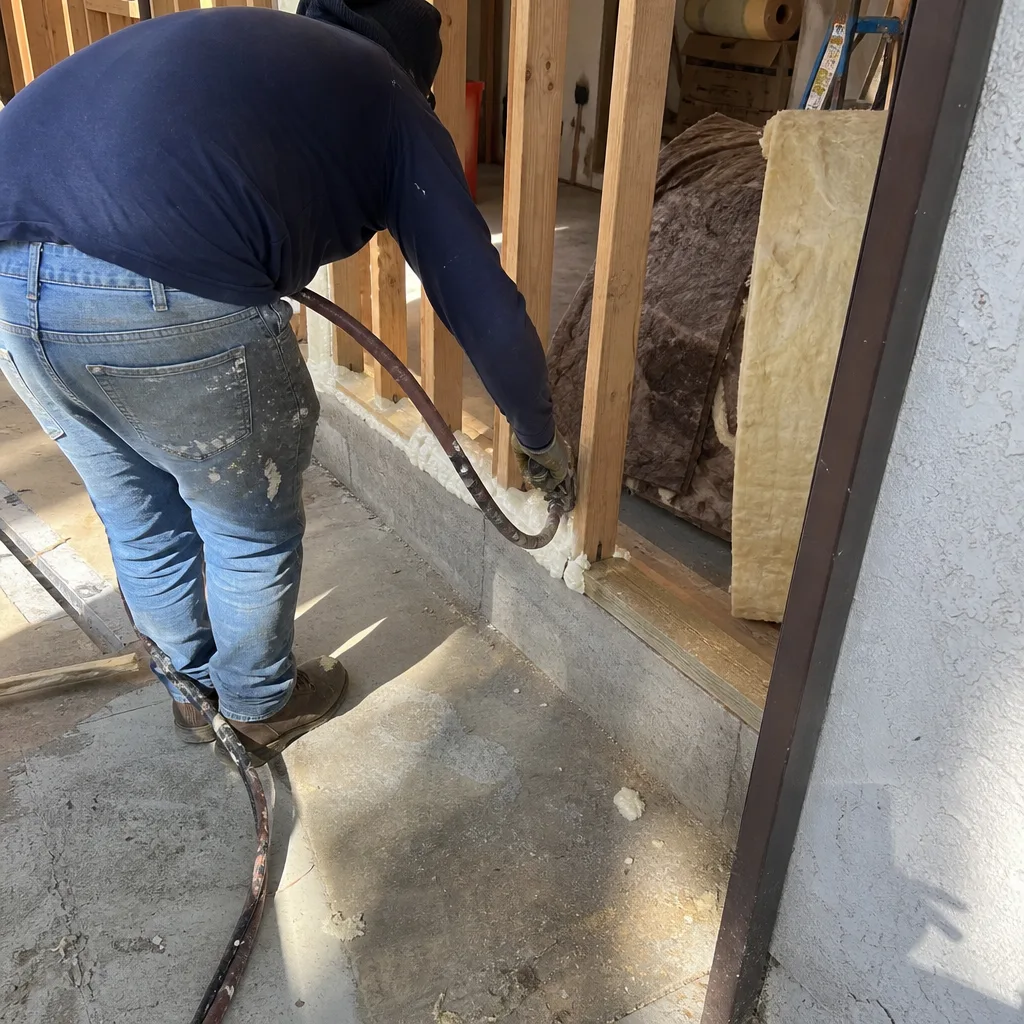
Manufacturer warranties are contracts with conditions. The homeowner who keeps documentation wins claims; the one who doesn’t loses them. This is not opinion - it’s the pattern from our 900+ project files.
What Manufacturers Actually Require
These are typical warranty conditions for ADU-scale equipment, verified from current manufacturer documentation:
| Equipment | Required Service Interval | Documentation Required | Common Denial Reason |
|---|---|---|---|
| Mini-split HVAC (Mitsubishi, Daikin, Fujitsu) | Annual professional service | Dated technician invoice with model/serial | No annual service record; improper filter maintenance |
| Tank water heater (Rheem, Bradford White) | Annual relief valve test; anode rod inspection at 2-3 years | Dated photo or technician report | No maintenance record; scale buildup from hard water |
| Heat pump water heater (Rheem ProTerra, AO Smith) | Annual filter cleaning; condensate drain check | Dated service record | Clogged air filter; improper electrical supply |
| Fiber-cement siding (James Hardie) | Annual inspection; repaint per climate exposure | Photo documentation of condition | Failure to maintain paint film; improper installation |
The “improper application” denial on HVAC is the one we see most. It covers two scenarios: equipment installed in conditions outside its design range (coastal-spec unit in Inland Empire climate), and equipment not maintained per manufacturer schedule. The first is an installation issue; the second is entirely within homeowner control.
The Haven Standard Documentation Practice
Under Clause 3 (Documented Condition), every Ellery ADU Studio project receives a photo record at completion showing equipment model/serial numbers, installation conditions, and baseline performance data. We encourage homeowners to continue this practice: annual service photos, filter replacement dates, any anomaly observations. A simple digital folder, date-stamped, satisfies any warranty auditor.
For homeowners who purchased ADUs from other builders, we offer a Free Second Opinion on system condition and documentation status. Call (951) 379-3047 to schedule; there’s no charge for the assessment, and we’ll identify any documentation gaps that could void future warranty claims.
Common Mistakes to Avoid
- Using coastal HVAC sizing for Moreno Valley loads. A unit spec’d for 85°F design temperature will run continuously and fail prematurely at 100°F. Always verify the installation manual specifies Inland Empire design conditions.
- Skipping vent screen maintenance until failure. Santa Ana dust clogs screens gradually; by the time airflow is visibly reduced, the condenser has already run dirty for weeks. Inspect quarterly, not annually.
- Assuming “Southern California” means no freeze risk. Moreno Valley’s 10-15 freeze nights have split pipes in unconditioned ADU utility spaces across Rancho Belago, Moreno, and Sunnymead Ranch. The repair cost exceeds prevention by 10x.
- Letting landscape overgrow against ADU walls. Vegetation traps moisture, harbors pests, and becomes ember fuel in Santa Ana conditions. Maintain 18-inch clearance minimum, 10 feet in wildland-urban interface zones.
- Ignoring manufacturer filter specifications. High-MERV filters (MERV 13+) restrict airflow on systems designed for MERV 8. The filter feels like an upgrade; the compressor failure is not.
- Failing to document “before” conditions seasonally. Warranty and insurance claims require proof of maintenance. A photo takes 30 seconds; a denied claim costs thousands.
- Delaying HVAC service until breakdown. May scheduling in Moreno Valley means waiting 2-3 weeks and paying emergency rates. Book in March for April service.
When to Call a Professional
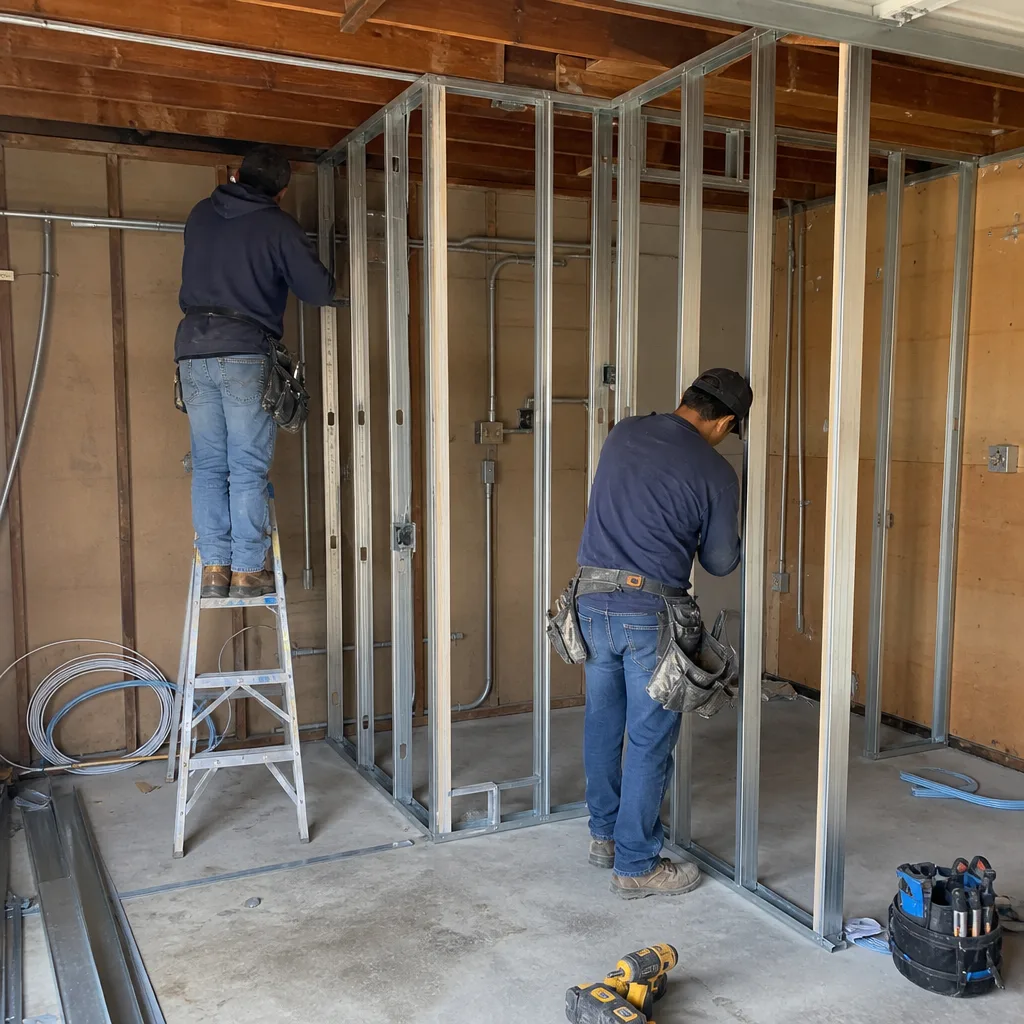
Some ADU maintenance is homeowner-appropriate: filter changes, visual inspections, basic landscaping. Other tasks require licensed expertise, both for safety and warranty preservation.
Call a licensed professional for: electrical panel work or any circuit modification; gas line inspection or appliance connection; roof work beyond visual inspection from ground or ladder; HVAC refrigerant handling or compressor diagnosis; water heater tank replacement or gas valve service; and any condition where manufacturer warranty coverage might apply - the service record must show licensed technician involvement.
For ADU-specific concerns - foundation settling, permit compliance questions, or system specifications that may not match Inland Empire conditions - Ellery ADU Studio Moreno Valley offers free estimates in Moreno Valley. We’ve assessed ADUs built by other contractors, identified warranty documentation gaps, and provided written scope for corrections. Call (951) 379-3047 to schedule. A live person answers 24/7; no voicemail queue, no callback promise that doesn’t materialize.
Frequently Asked Questions
Annual professional maintenance for a typical Moreno Valley ADU runs $400-$800, covering HVAC service, water heater inspection, and exterior assessment. DIY tasks - filter changes, vent cleaning, landscape clearance - add $100-$200 in materials. Major items like radiant barrier retrofit or pipe insulation upgrade run $800-$1,500 but pay back in utility savings and avoided failure costs. Call (951) 379-3047 for a written estimate on any scope - estimates are free, and the price is fixed before work starts under Haven Standard Clause 1.
No. Under Haven Standard Clause 5 (No Surprises), the scope is locked at signing. We don’t do door-side upsells or scope creep. If we find a condition that requires additional work, we document it, quote it separately, and you approve it before proceeding. The original scope price does not change.
Every 12 months minimum, preferably in March before the cooling season demand surge. Replace filters monthly July through September. The manufacturer’s warranty requires annual professional service with dated documentation; skipping it voids compressor coverage.
Yes, if your ADU is in Moreno Valley. The city’s 10-15 annual freeze nights concentrate in December through February, and uninsulated pipes in garage conversions or detached unit crawl spaces freeze at 28-30°F ambient. Pipe insulation costs $2-$4 per linear foot installed; a freeze split costs $500-$3,000 to repair, plus water damage.
Replace standard aluminum vent screens with stainless or epoxy-coated steel before October; verify soffit vent baffles are secure; maintain 10-foot vegetation clearance for ember protection; and photograph exterior condition for insurance documentation. East-facing ADUs in foothill neighborhoods like Box Springs see the highest sustained winds.
Check the installation manual or call the installing contractor for the design temperature specification. Moreno Valley requires 100°F outdoor design temperature; coastal specs use 85°F. If your unit cycles off on high-pressure lockout during summer afternoons, it’s likely undersized for actual load. Ellery ADU Studio verifies Inland Empire design conditions on every specification; we can assess existing systems during a free estimate visit.
The Bottom Line
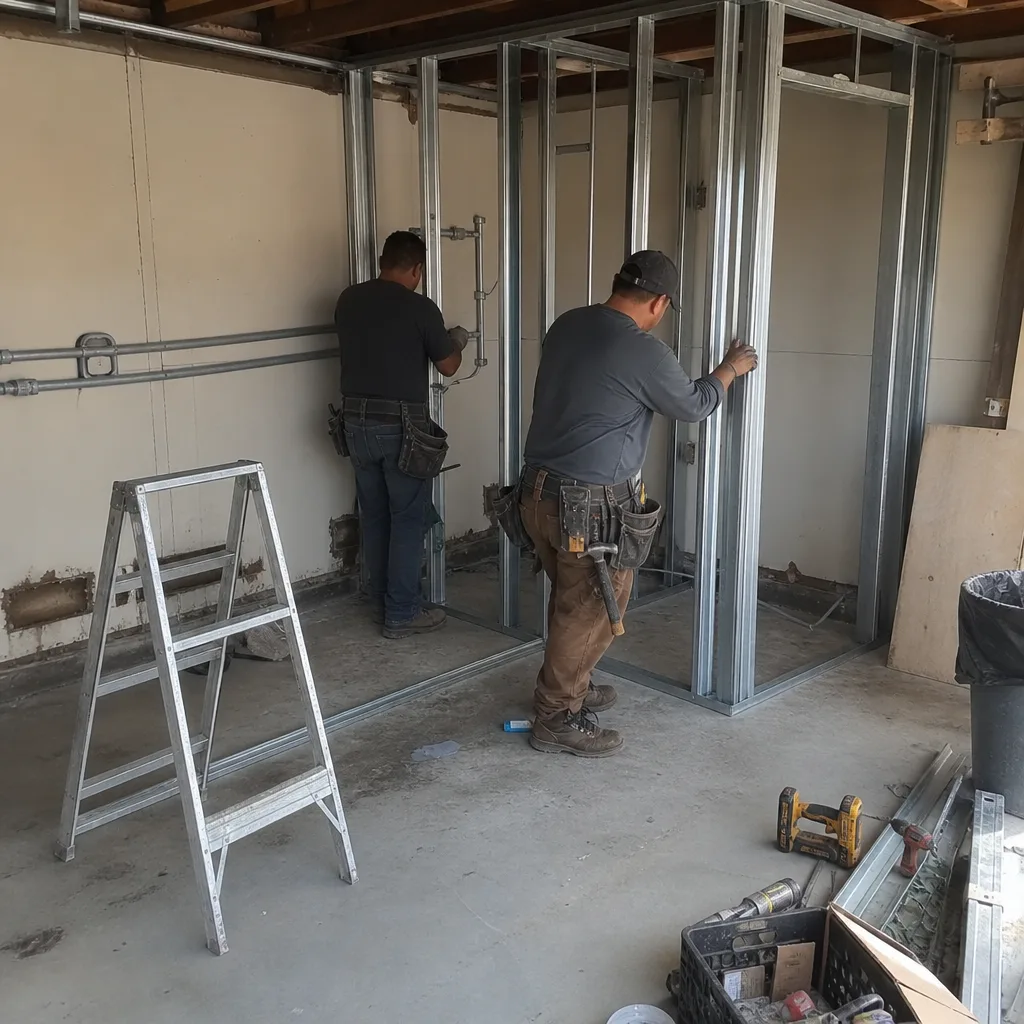
Moreno Valley’s Inland Empire climate - 100°F summers, Santa Ana winds, and hard freeze nights - creates an ADU maintenance rhythm that coastal guides miss entirely. The core tasks are simple: monthly filter checks March through October, quarterly exterior inspections, pre-October wind prep, December pipe protection, and documented annual professional service to preserve manufacturer warranties. Skip any of these and you risk equipment failure, water damage, or warranty denial - all avoidable with a calendar, a camera, and more guides & resources from our team. The homeowners who protect their ADU investment treat maintenance as scheduled, documented, and non-negotiable, not as a reaction to failure.
Written by Nadia Ellery, Owner at Ellery ADU Studio Moreno Valley, serving Moreno Valley since 2015.