
Last updated September 25, 2026
ADU Warning Signs: A Moreno Valley Homeowner’s Reference Guide
By the time a Moreno Valley homeowner notices framing that doesn’t match the approved drawings, the contractor has already passed a rough inspection that shouldn’t have been signed off - unraveling it costs more than the framing. In our experience across 900+ ADU projects since 2015, the warning signs that predict a failed project are almost always administrative before they are physical. A missed plan-check response deadline, an unsigned change order, or a permit set that never made it to the job site - these do more damage than a cracked pour, and most homeowners recognize them too late. This guide shows you what to watch for, how to verify what your contractor tells you, and when the paperwork trail reveals a problem that the framing hasn’t caught up to yet.
Quick Answer
The most dangerous ADU warning signs are document-based, not construction-based: a contractor who cannot produce the approved permit set on-site during framing, change orders that add “time and materials” language to a fixed-price contract, and inspections that appear in conversation but not in Moreno Valley Development Services’ online portal. Deciding between handling changes yourself or leaving them to your contractor? Read our DIY vs Professional ADU: The Moreno Valley Homeowner’s Decision Guide. These administrative failures predict cost overruns and permit rejection before any physical defect becomes visible.
Table of Contents
- Document-Based Warning Signs: What the Paperwork Reveals First
- How to Verify Inspections Through Moreno Valley’s Online Permit Portal
- Change-Order Red Flags: When Fixed Price Becomes Cost-Plus
- Material Substitution Warning Signs and Plan-Check Requirements
- Three Contractor Communication Patterns That Predict Disputes
- Physical Warning Signs That Confirm Administrative Failure
- Common Mistakes to Avoid
- When to Call a Professional
- Frequently Asked Questions
- The Bottom Line
Document-Based Warning Signs: What the Paperwork Reveals First
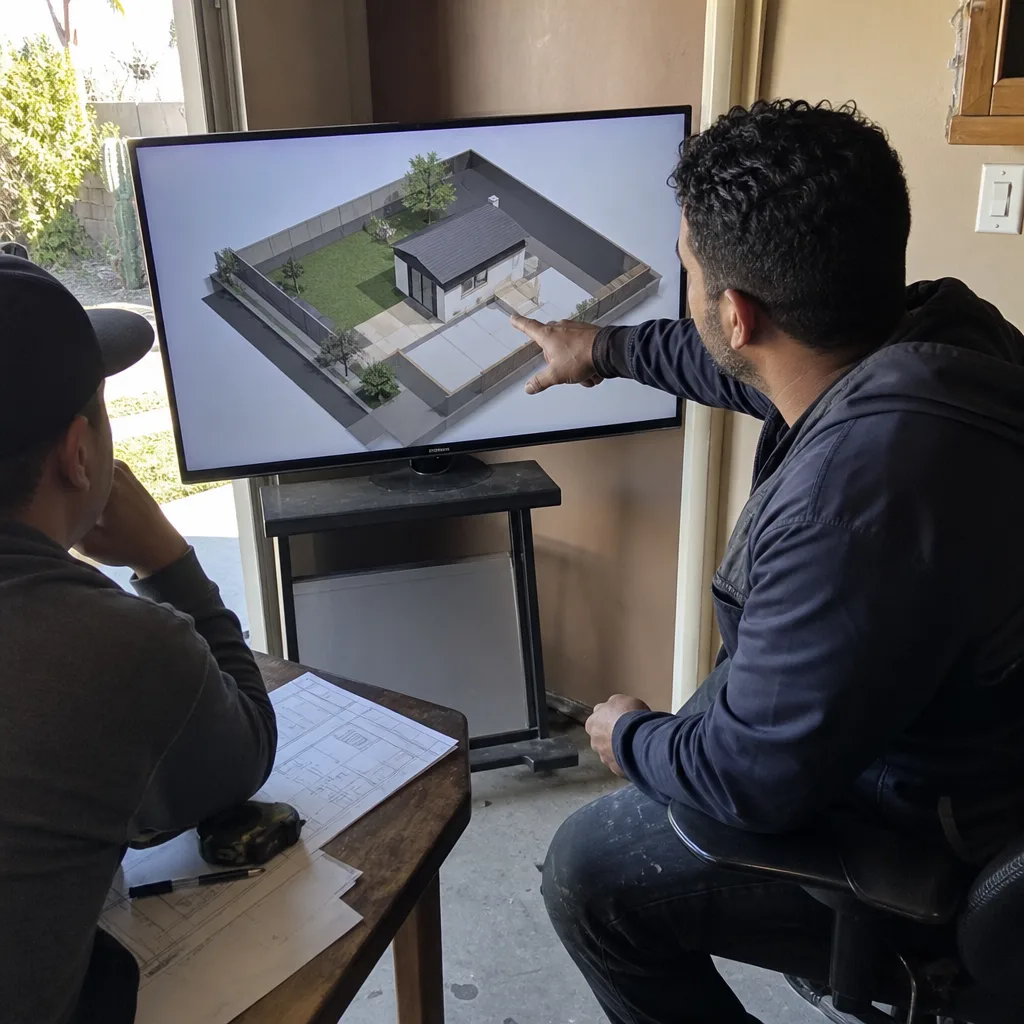
The approved permit set is the legal document that governs every square foot of your ADU. It includes the architectural plans, structural calculations, Title 24 energy compliance forms, and the specific fire-resistive assembly details that Moreno Valley Development Services stamped as compliant with the 2022 California Building Code. When a contractor treats this document as optional on the job site, the project is already off track.
Here is what we require on every Ellery ADU Studio project, and what you should require on yours:
- The permit set must be present on-site during framing. Not on a phone. Not “back at the office.” The full, stamped, approved set. If your contractor shows up with a single reduced-size sheet or refers to “the plans I drew from memory,” that is not a minor organizational issue. It means the field work is not being checked against the approved documents. We have seen contractors in the Moreno Valley area frame walls 6 inches out of position because they were working from an early draft, not the stamped revision that included the corrected setback.
- Each inspection record must match the permit number. The permit number is issued by Moreno Valley Development Services at plan-check approval. Every inspection - footing, foundation, under-floor, rough electrical, rough plumbing, rough mechanical, insulation, drywall, final - is logged against that number. If your contractor mentions passing an inspection but cannot show you the signed inspection card or the online record, the inspection has not happened.
- Change orders must reference specific plan sheets and specifications. A legitimate change order identifies the drawing sheet (A-3, S-2, etc.), the specification section, and the exact deviation from the approved documents. Vague language like “adjust per field conditions” or “owner request” without a dated, signed document is a red flag.
- The contractor’s license number must appear on the contract, the permit application, and the job-site posting. California Business and Professions Code Section 7030.5 requires this. If the number on the contract does not match the number on the permit, or if the job site shows no license posting, you may be looking at an unlicensed operator using another company’s permit.
In Moreno Valley specifically, the Development Services Department has moved aggressively to digital records since 2021. The permit portal is searchable by address. A contractor who claims a delay “because the city lost the paperwork” is almost always describing a delay they caused themselves - a rejected resubmittal, an unpaid fee, or a correction notice they never addressed.
Under Haven Standard Clause 5 (No Surprises), our scope is locked at signing. No door-side upsells, no scope creep. The permit set is the governing document, and any deviation requires a written change order with a fixed price before work proceeds. This is not exceptional service. It is the minimum standard that prevents the administrative failures that destroy ADU budgets.
How to Verify Inspections Through Moreno Valley’s Online Permit Portal
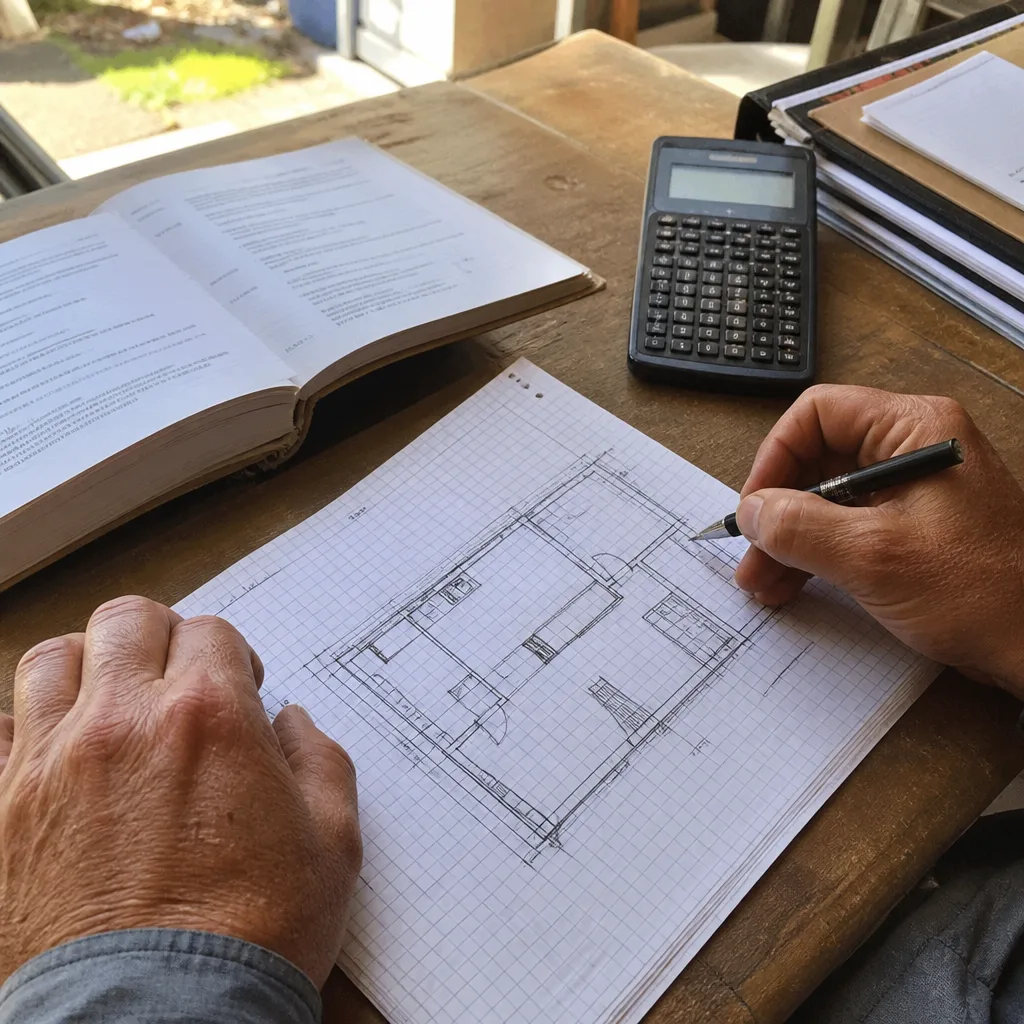
Moreno Valley Development Services maintains an online permit lookup system at moval.org under the “Building & Safety” section. You do not need an account. You need the property address or the permit number. This is your primary verification tool, and checking it takes less time than reading this section.
Here is the exact process:
- Navigate to the permit lookup page and enter your property address exactly as it appears on your deed or preliminary title report. In Moreno Valley, street directionals matter: “N. Perris Blvd.” and “Perris Blvd.” may return different results.
- Locate your active ADU permit. The permit type will show as “Addition” or “New Construction” depending on whether your project is a Garage Conversion ADU in Moreno Valley or a New Detached ADU in Moreno Valley.
- Click through to the inspection history. You will see a table with columns for inspection type, date requested, date completed, and result. The result field shows “Approved,” “Rejected,” “Partial,” or “Not Ready.”
- Compare this record against what your contractor has told you. If the contractor says the rough inspection passed on Tuesday but the portal shows “Rejected” with a correction list dated Wednesday, you have a discrepancy that requires immediate explanation.
- Check for inspection sequence gaps. Moreno Valley enforces a logical inspection order: foundation before framing, rough before insulation, insulation before drywall. If you see a final inspection logged without an insulation inspection, that is a serious irregularity.
The portal updates within 24 hours of inspection completion in most cases. A contractor who claims a week-long delay “waiting for the city to update the system” is describing a problem that does not exist. We have had 47 projects through Moreno Valley Development Services since 2015. The longest portal update delay we have experienced is 72 hours, and that was during the COVID-19 backlog period.
One specific Moreno Valley quirk: the city contracts with Riverside County for certain plan-check services on structural and fire-resistive assemblies. This can create a dual tracking number system - a Moreno Valley permit number and a Riverside County review reference. Your contractor should be able to produce both and explain which review is pending. If they cannot, they may not understand their own submittal.
Change-Order Red Flags: When Fixed Price Becomes Cost-Plus
The change order is where fixed-price ADU contracts die. Not in the initial negotiation, where everyone is optimistic. In the middle of construction, when the foundation is open and the homeowner has no leverage.
California law requires written change orders for residential construction exceeding $500. But the law does not regulate the content of those change orders. Specific language patterns convert a fixed-price agreement into a cost-plus arrangement without the owner realizing it.
Watch for these exact phrases:
- “Time and materials not to exceed…” This is not a fixed price. It is a cost-plus contract with a ceiling you have no way to verify. The contractor controls the time. The contractor controls the materials markup. The “not to exceed” figure is almost always exceeded.
- “Owner to pay actual costs plus [X]%.” This converts your contract to cost-plus retroactively. If you signed a fixed-price agreement, any change order containing this language invalidates the original pricing structure for the changed scope. We have reviewed competitor contracts where this language appeared in the fourth change order of a garage conversion, converting a $78,000 fixed price to a $112,000 final bill.
- “Per plans and specifications, as revised.” Without a specific revision date and sheet number, this language allows the contractor to reference any version of the plans, including drafts that were never approved. It also bypasses the requirement to document the deviation from the stamped set.
- “Allowance adjustment.” Allowances are common in ADU construction for finishes the owner has not yet selected. But an “allowance adjustment” change order that increases the base contract price without a corresponding selection is simply a price increase disguised as accounting.
- “Unforeseen conditions.” This phrase has legitimate uses - buried debris, undocumented utility lines, soil conditions that differ from the geotechnical report. But in Moreno Valley’s established neighborhoods, with known soil conditions and mapped utilities, “unforeseen conditions” appears on change orders far more often than actual unknowns warrant. The contractor’s site investigation, not your wallet, should absorb predictable conditions.
Under Haven Standard Clause 1, every Ellery ADU Studio project is quoted with a written price before any work begins. The words “call for a quote” do not appear anywhere on our site because they do not describe our process. When a change order is necessary - and they are rare - the price is fixed in writing before work proceeds. The scope is locked at signing per Clause 5. No door-side upsells, no scope creep.
Here is a specific verification step: ask your contractor for the change order log from their last five Moreno Valley ADU projects. Not the final invoices - the log of every change order issued, with the reason and the resolution. A contractor who cannot produce this is a contractor who does not track the metric that predicts client satisfaction.
Material Substitution Warning Signs and Plan-Check Requirements
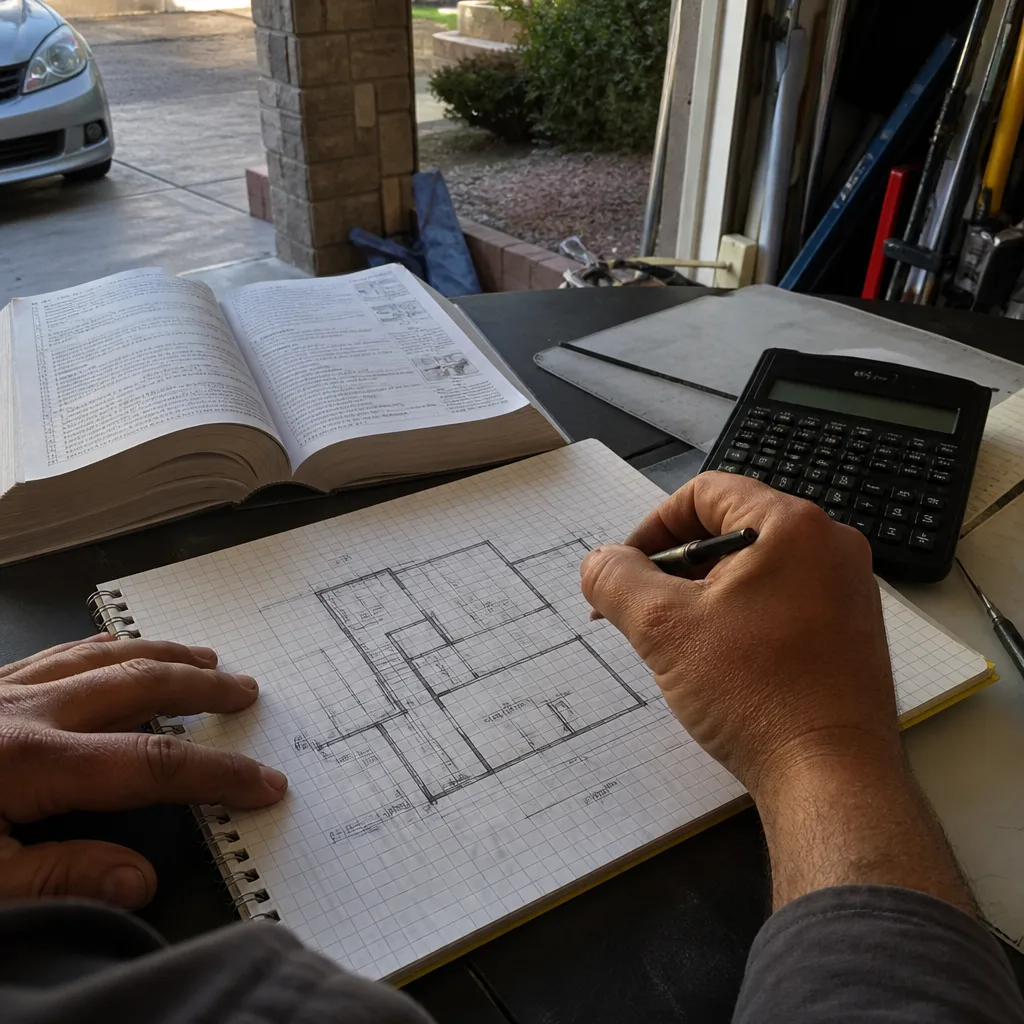
Material substitutions are inevitable in construction. Supply chain disruptions, discontinued products, and code updates all force deviations from the specified materials. The critical distinction is between substitutions that require a plan-check revision and substitutions that are field-approved under the contractor’s authority.
This distinction matters because an unapproved substitution can invalidate your certificate of occupancy. Moreno Valley Development Services has rejected final inspections because a contractor substituted a non-rated door assembly in a fire-resistive wall, a substitution that required a revised Title 24 compliance form that was never submitted.
Substitutions requiring plan-check revision:
- Structural materials: lumber species or grade, engineered wood products, concrete mix design, rebar size or spacing
- Fire-resistive assemblies: rated doors, rated drywall type and thickness, intumescent coatings, fire-blocking materials
- Energy compliance components: insulation R-value, window U-factor and SHGC, HVAC equipment efficiency ratings
- Plumbing and electrical fixtures when specified for water conservation or energy compliance
Field-approved substitutions (with documented approval):
- Cosmetic finishes: paint color, cabinet hardware, non-structural tile, flooring within the same performance grade
- Equivalent-rated fixtures: a WaterSense-labeled toilet substituted for another WaterSense-labeled toilet with equal or better flush volume
- Fasteners and connectors: equivalent Simpson Strong-Tie or USP products with matching load ratings
The warning sign is not the substitution itself. It is the substitution without documentation. Ask these questions when a contractor proposes a change:
- Does this substitution require a revised plan-check submittal? If yes, what is the submittal date and expected turnaround?
- Does this substitution affect Title 24 compliance? If yes, who recalculates the energy model and resubmits to the city?
- Does this substitution affect the fire-resistive assembly rating? If yes, where is the revised assembly detail in the permit set?
- What is the price impact, and is it captured in a written change order per Haven Standard Clause 1?
In Moreno Valley’s climate - hot, dry summers with significant diurnal temperature swing - material selection has performance implications beyond code compliance. James Hardie fiber-cement siding, which we specify on many projects, performs differently in this climate than vinyl or wood alternatives. A contractor who substitutes without understanding thermal expansion coefficients or moisture management is not saving you money. They are deferring a failure.
We have coordinated ADU Design & Permitting in Moreno Valley with prefab systems from Plant Prefab and Tuff Shed, among others. These systems arrive with material certifications and assembly details pre-approved by the manufacturer. Substitutions within these systems are more restricted, which is a feature, not a limitation. The manufacturer has already solved the compliance question. The contractor’s role is to verify that the delivered product matches the certified assembly.
Three Contractor Communication Patterns That Predict Disputes
After 900+ ADU projects, we can identify dispute-predictive communication patterns with high confidence. These patterns appear before construction is 50% complete, often before groundbreaking. They are behavioral, not technical, which makes them easy to miss if you are focused on construction quality rather than process quality.
Pattern 1: The Disappearing Documentation
The contractor communicates verbally, never in writing. Permits are “in progress,” inspections “went fine,” change orders “are being processed.” When you request documentation, the response is personable but non-specific: “I’ll get that to you,” “The city has it,” “My office handles that.”
This pattern predicts that documentation does not exist. The permit may not have been submitted. The inspection may have failed. The change order may not have been priced. Verbal communication is not a personal style. It is a control mechanism that prevents you from verifying claims.
Our response: every Ellery ADU Studio client receives a documented photo record on every visit. Clients receive evidence of what was found and what was done, not a summary of how it felt. The permit set, the inspection schedule, and the change order log are accessible in writing from project start.
Pattern 2: The Urgency Pivot
The contractor introduces time pressure unrelated to actual schedule constraints. “I need a decision today or the crew walks,” “The lumberyard needs the order by 5 PM,” “The inspector comes tomorrow and we need this signed.”
Real schedule constraints exist in construction. But in our experience, manufactured urgency correlates with decisions the contractor does not want you to research. The lumberyard order deadline is real; the claim that only one siding profile is available is not. The inspector’s visit is scheduled; the claim that an unsigned change order will delay occupancy by six months is not.
Under Haven Standard Clause 5, the scope is locked at signing. No door-side upsells, no scope creep. We do not bring pricing decisions to the job site. They are resolved in writing, with time for review, before work proceeds.
Pattern 3: The Blame Diffusion
The contractor cannot answer a straightforward question without involving a third party. “The designer specified that,” “The engineer has to sign off,” “The city is being difficult.” In a traditional design-bid-build project, this diffusion is structural: the designer, the builder, and the city are genuinely separate entities with competing incentives.
In a Ellery ADU Studio Moreno Valley home project, the design-build model eliminates this gap. The drawings, the permit set, and the construction are a single contract at a single written price. When we specify James Hardie siding or coordinate a Plant Prefab delivery, we do not point to a separate designer or a separate builder. We are responsible for the specification, the compliance, and the installation.
The warning sign is not that problems arise. Problems always arise. The warning sign is that the contractor’s first response to any problem is to identify whose fault it is rather than what the solution is.
Physical Warning Signs That Confirm Administrative Failure
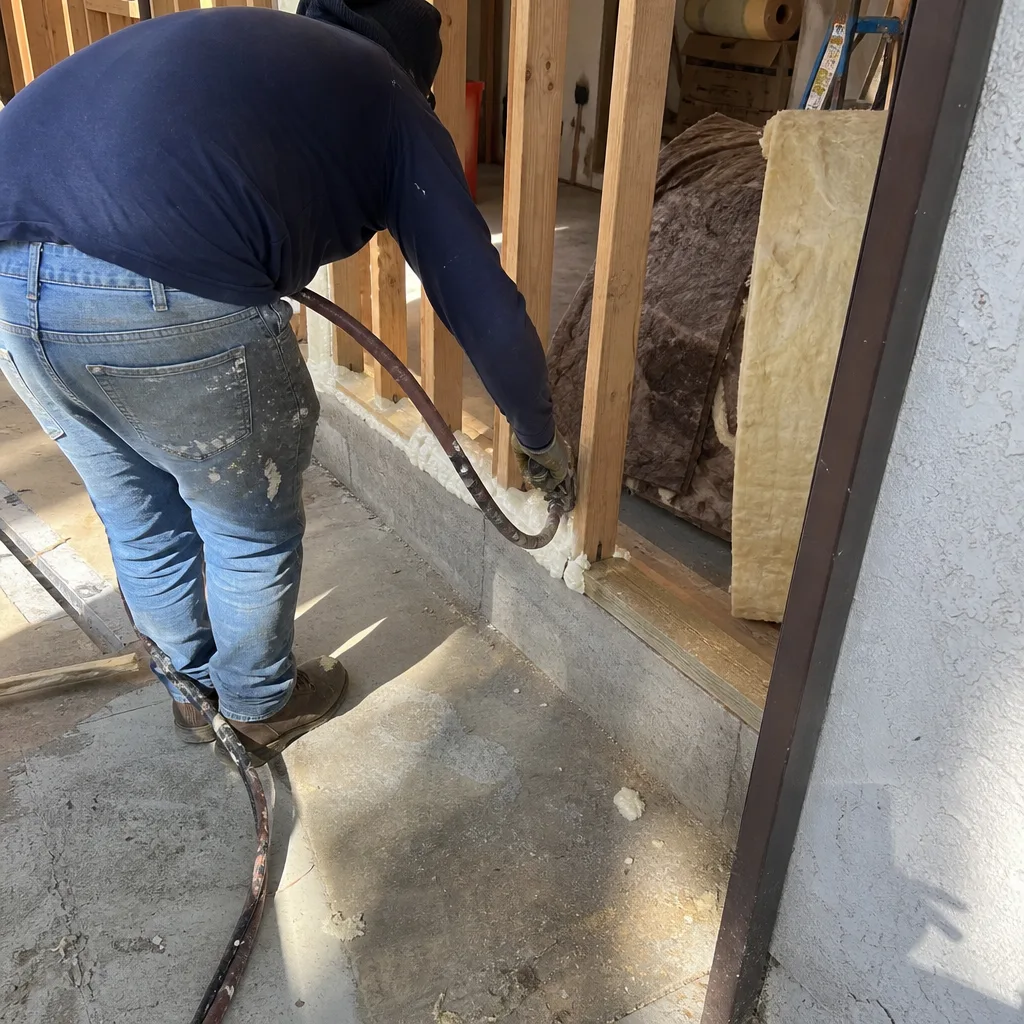
Physical defects are usually lagging indicators. The permit set was not on site, so the framing does not match. The inspection was not properly scheduled, so the drywall covers a failed rough inspection. The change order was not documented, so the window specification changed without a corresponding plan-check revision.
These are the physical signs we most commonly see when called to evaluate a troubled project:
- Framing that does not match the approved window schedule. Window locations are dimensioned on the architectural plans. A window framed 12 inches from the corner instead of the specified 24 inches is not a minor field adjustment. It is a deviation from the energy model, the structural load path, and the egress requirements. In Moreno Valley, where summer cooling loads are significant, window placement directly affects Title 24 compliance.
- Drywall installed before confirmed rough inspection approval. This is the most common fatal error we encounter. The contractor “forgot” to schedule the inspection, or the inspection failed and was not rescheduled, or the inspector was “too busy” and the contractor proceeded without approval. Covering electrical, plumbing, or mechanical rough work without inspection approval requires removal for verification. The cost typically exceeds $4,000 in labor and materials, plus schedule delay.
- Foundation dimensions that differ from the site plan. The site plan shows setbacks from property lines, easements, and existing structures. A foundation poured 18 inches into a required setback is not a construction error. It is a permit violation that may require partial demolition. In Moreno Valley’s older neighborhoods with non-conforming lot dimensions, setback precision is critical.
- Roof pitch or eave dimensions that conflict with the elevation drawings. This often indicates that the contractor used a standard detail rather than the project-specific elevation. For detached ADUs in Moreno Valley, roof pitch affects both drainage in infrequent but intense rain events and compliance with neighborhood design guidelines in certain zones.
- Electrical panel location that does not match the approved plans. The service equipment location is specified for a reason: conductor length limitations, working clearances, and accessibility requirements. A relocated panel without plan-check revision may violate NEC Article 110.26 working space requirements or create an uninsurable condition.
When we encounter these signs during a ADU Design & Permitting in Moreno Valley consultation, the first step is always administrative, not physical. We request the complete permit file, the inspection history, and the change order log. The physical defect is usually the visible symptom of a documentation failure that began weeks earlier.
Common Mistakes to Avoid
- Assuming the contractor pulled the correct permit type. Moreno Valley distinguishes between “Addition” permits for garage conversions, “New Construction” for detached ADUs, and “Alteration/Repair” for interior conversions. The wrong permit type invalidates the inspection sequence and may require resubmittal. Verify the permit type matches your project before work begins.
- Accepting verbal confirmation of inspection results. The online portal is the record. A contractor’s claim that “it passed, the inspector just hasn’t updated the system” is unverifiable and frequently false. Check the portal within 48 hours of every claimed inspection.
- Signing change orders under job-site pressure. Every change order should be reviewable overnight. If the contractor cannot wait 24 hours for your signature, the urgency is manufactured. Under Haven Standard Clause 1, pricing is fixed in writing before work proceeds. There is no scenario where a same-day signature prevents a delay that was not caused by the contractor’s own scheduling failure.
- Failing to request the as-built documentation package. At project completion, you should receive: the final permit set with all revision clouds and approval stamps, the complete inspection record, the Certificate of Occupancy, and the contractor’s warranty documentation. A contractor who “will get that together later” is a contractor who never assembled it. This package is essential for future sale, refinance, or insurance claims.
- Ignoring neighborhood-specific conditions in Moreno Valley. The Box Springs area has different soil conditions than the valley floor near the 60 freeway. Sunnymead Ranch has specific HOA requirements that predate city ADU ordinances. A contractor who applies a uniform approach across all Moreno Valley neighborhoods has not done the site-specific analysis that prevents foundation and drainage failures.
- Selecting a contractor based on lowest initial quote without comparing permit-set quality. The permit set is the core product, not an afterthought. A low initial quote with a permit set prepared by an unlicensed drafter, or with missing structural calculations, will generate change orders that exceed the higher initial quote from a design-build studio with in-house permitting expertise.
- Not verifying that the contractor’s license covers ADU construction specifically. A B-General Building license permits ADU construction, but a C-36 Plumbing or C-10 Electrical license does not authorize structural work. Verify the classification at cslb.ca.gov.
When to Call a Professional
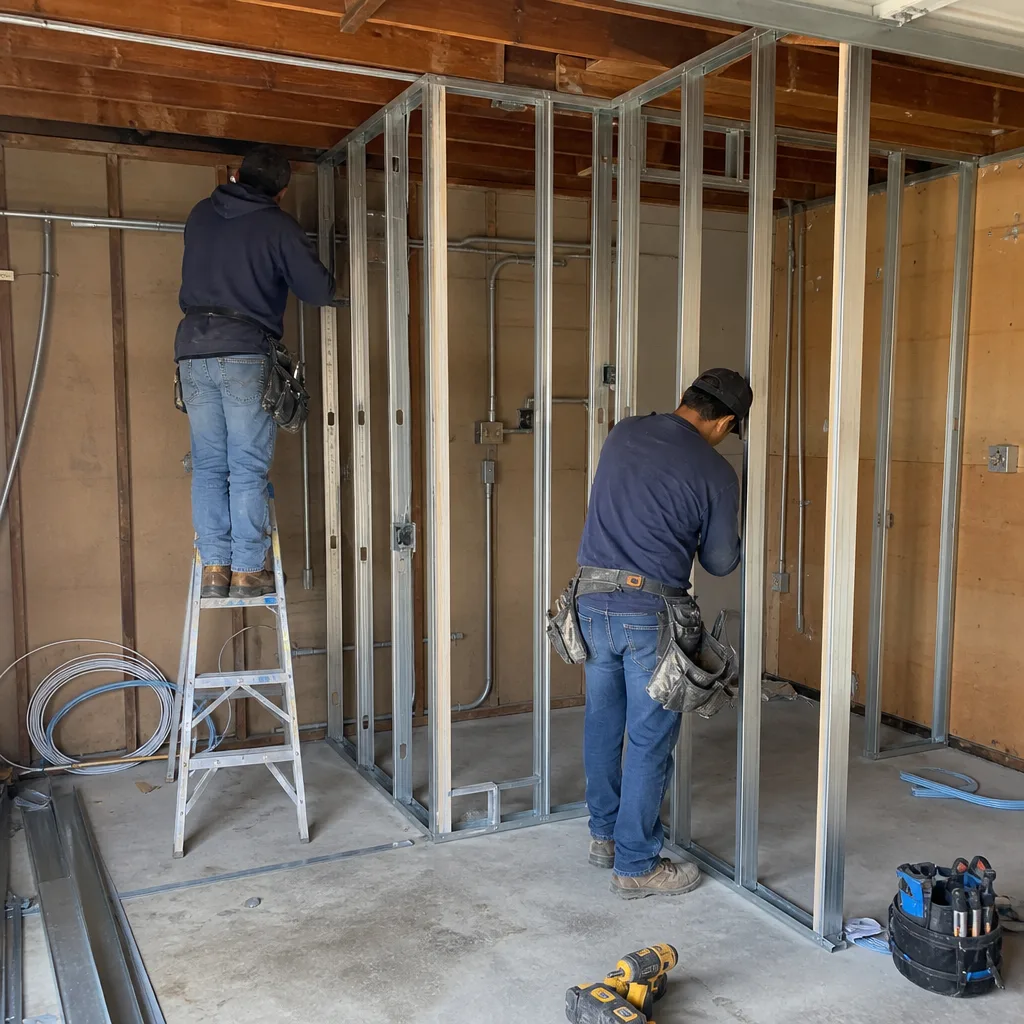
Call for independent evaluation when: your contractor cannot produce the stamped permit set on request; an inspection your contractor claims passed does not appear in the Moreno Valley portal within 72 hours; any change order contains “time and materials” or “actual cost plus” language; you observe framing, foundation, or MEP rough-in that visibly conflicts with the approved plans; or your contractor’s communication has shifted from documented to verbal without explanation.
Ellery ADU Studio Moreno Valley offers free estimates in Moreno Valley - call (951) 379-3047. We also provide a Free Second Opinion on any written estimate already in hand, with specific attention to permit-set completeness, inspection sequencing, and change-order risk exposure. A live person answers calls 24/7.
Frequently Asked Questions
Remediation costs typically range from $3,500 for isolated electrical corrections to $18,000+ for foundation or structural deviations requiring plan-check revision and re-inspection. The dominant cost driver is not the physical repair but the schedule delay: each re-inspection cycle adds 2-4 weeks in Moreno Valley’s current queue, and carrying costs accumulate. Call (951) 379-3047 for an exact assessment of your situation - estimates are free.
Yes. The California State License Board at cslb.ca.gov allows license verification by number or company name. Check the license classification (B-General Building for full ADU construction), the bond status, and the workers’ compensation coverage. The CSLB also maintains a searchable complaint history. This takes approximately 5 minutes and should be done before signing any contract.
A plan-check revision is a formal resubmittal of modified drawings to the city for re-approval. It is required when any change affects structural, fire-resistive, or energy compliance elements. Cosmetic changes within the same performance specification do not require revision. In Moreno Valley, revisions enter the same queue as new submittals, with current turnaround of 4-6 weeks for residential projects. A contractor who proceeds with revised work before revision approval is building without a valid permit.
Under a genuine fixed-price contract with a complete permit set, the price should not change for the defined scope. Price changes occur when: the contract was not actually fixed-price (contained allowances, T&M clauses, or undefined scope); the owner requests changes; or unforeseen conditions outside the contractor’s reasonable site investigation require additional work. Under Haven Standard Clause 1, every Ellery ADU Studio project is quoted with a written price before any work begins. The scope is locked at signing per Clause 5. Call (951) 379-3047 to review your existing estimate for fixed-price integrity.
No. The primary ADU permit includes all trade inspections under a single permit number. However, each trade requires separate rough and final inspections, and each must be scheduled in sequence. A contractor who claims to have “passed electrical” but the portal shows only a plumbing rough inspection has misrepresented the status. Verify each trade inspection individually.
Moreno Valley is in Seismic Design Category D, requiring specific footing depth, rebar placement, and anchor bolt spacing. These details appear on the approved structural plans (typically sheet S-2 or S-3). During foundation inspection, the city inspector verifies depth, rebar size and placement, and anchor bolt location against these plans. You can verify compliance by requesting the foundation inspection photos and comparing them to the plan details. A contractor who pours without inspection approval is assuming liability for potential seismic non-compliance.
The Bottom Line
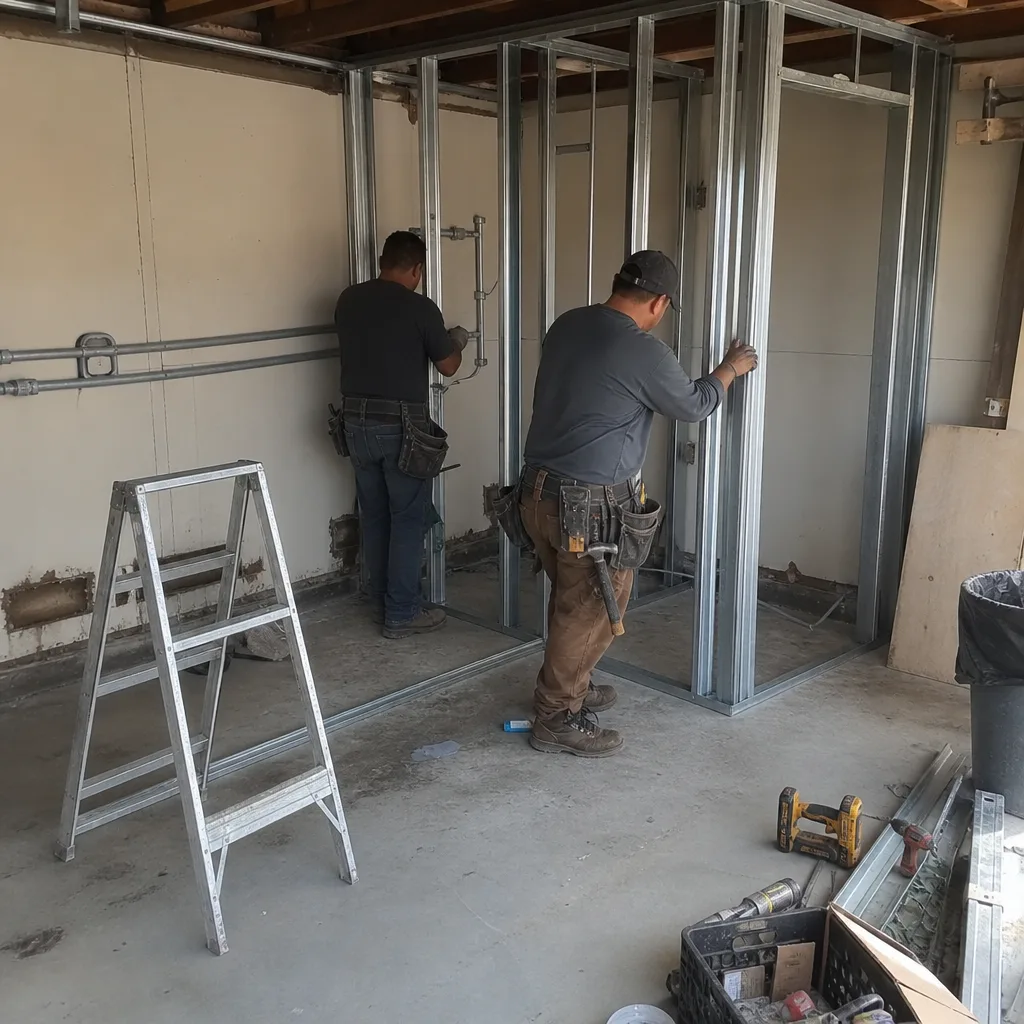
The warning signs that destroy ADU projects are administrative before they are physical. The permit set that never reaches the job site, the inspection that passes in conversation but not in the portal, the change order that converts fixed price to cost-plus - these failures predict cost overruns and permit rejection before any framing error becomes visible. In Moreno Valley’s established neighborhoods, with known soil conditions and a transparent digital permit system, there is little genuine uncertainty. What appears as “unforeseen” is usually unverified.
Your protection is verification: the permit set on site, the portal checked independently, the change order reviewed overnight, the license confirmed with the CSLB. These steps require no construction expertise. They require the discipline to treat a six-figure project with the documentation rigor it deserves.
Written by Nadia Ellery, Owner at Ellery ADU Studio Moreno Valley, serving Moreno Valley since 2015.